

Templates Guides
Garage Door Maintenance Checklist: Free PDF Download
 Garage Door
October 23rd, 2026
ServiceTitan


A garage door maintenance checklist is a structured list of inspection and preventive maintenance tasks used to assess the condition, operation, and safety of a garage door opener.
This helps you spot issues early, document maintenance work, and keep the door operating smoothly and safely.
The key components of a garage door maintenance checklist are:
Door and hardware: Inspect door panels, hinges, roller brackets, tracks, and fasteners.
Springs and cables: Check for visible wear, damage, or signs of failure.
Opener: Test the opener, controls, and safety-reversal system.
Sensors: Check photoelectric safety sensors for proper operation and alignment.
Balance and movement: Check that the door moves smoothly and remains balanced.
Lubrication: Lubricate appropriate moving components according to manufacturer guidance.
While homeowners can typically handle routine testing and basic maintenance of automatic garage doors, repairs involving torsion springs, cables, and other critical hardware are generally best left to qualified professionals.
In this guide, we’ll look at why regular maintenance and timely garage door repair matter and which tasks to include in your checklist.
You can also complete the form on the right to get our free garage door maintenance checklist directly in your inbox.
Why Use a Garage Door Maintenance Checklist?
A garage door checklist turns routine maintenance from “looks good to me” into a repeatable process that reduces the risk of overlooking important tasks.
The #1 newsletter for the trades.
Here’s why you should use one:
It helps you detect issues before they become emergencies. A structured checklist helps garage door techs spot worn hardware, damaged components, alignment issues, and other problems early.
It keeps safety checks consistent. A checklist makes recurring safety checks easier to document and remember, ensuring a more reliable process.
It creates better service records. Documented inspections give contractors a clearer history of what was checked, what was found, and what work was recommended.
It improves technician consistency. Every technician follows the same process, which reduces the chance of skipping important inspection points.
It builds customer confidence. A documented maintenance report gives your customers greater peace of mind than a verbal “looks good to go.”
What Should a Garage Door Maintenance Checklist Include?
A good garage door maintenance checklist should cover the door, opener, safety systems, hardware, and any problems that need follow-up.
Must-have checklist sections include:
Checklist section | What it should cover |
Customer and Property Details | Customer name, contact information, service address, property type, and garage location |
Installation Information | Original installation date, installer, installation type, and relevant installation records, if available |
Garage Door Identification | Door type, material, size, model, serial number, manufacturer, and other identifying information |
Opener and Component Details | Opener manufacturer, model, age, drive type, controls, photoelectric sensors, and other relevant components |
Warranty Provider | Manufacturer, installer, or other warranty provider and applicable contact information |
Warranty Type | Parts, labor, structural, opener, or other applicable warranty coverage |
Coverage Periods | Start and expiration dates for each applicable warranty |
Covered Defects | Defects or component failures covered under the applicable warranty terms |
Available Remedies | Repair, replacement, adjustment, or other remedies available under the warranty |
Labor and Service-Call Coverage | Whether labor, inspection, travel, or service-call costs are covered |
Warranty Exclusions | Damage or conditions excluded by the warranty, such as unauthorized modifications, misuse, or improper maintenance |
Maintenance Requirements | Required lubrication, inspections, cleaning, adjustments, and other manufacturer-specified maintenance (manufacturer instructions should take precedence over generic maintenance practices) |
Proof of Maintenance | Previous service records, inspection dates, technician notes, and invoices |
Manufacturer Instructions | Applicable warnings, maintenance procedures, safety checks, and model-specific requirements from the owner’s manual |
Unauthorized Repairs or Alterations | Any modifications, repairs, or adjustments that could affect operation, safety, or warranty coverage |
Current Problem Description | Customer-reported symptoms, unusual noises, operating problems, damage, or recent incidents |
Visual Inspection Findings | Condition of springs, cables, rollers, hinges, pulleys, tracks, brackets, fasteners, panels, and other visible hardware |
Safety-System Test Results | Opener reversal, photoelectric sensor operation, door balance, and other applicable safety-system checks |
Cause Assessment | Likely cause of identified problems, such as normal wear, misalignment, component failure, or improper adjustment |
Recall Check | Check applicable manufacturer and U.S. Consumer Product Safety Commission (CPSC) recall information for the door, opener, or related equipment |
Claim Documentation | Photos, inspection findings, service records, receipts, model/serial numbers, and other documents needed to support a warranty claim |
Claim Submission Details | Date submitted, warranty provider, claim number, submission method, and supporting documentation |
Claim Status and Decision | Pending, approved, denied, or other status, along with the provider's decision and next steps |
Repair or Replacement Record | Work performed, components replaced, technician, date, parts used, and recommendations for future service |
Customer and Technician Sign-Off | Technician name and signature, customer acknowledgment, date, and confirmation of recommended follow-up work |
Once you’ve covered what belongs on the checklist, the next step is to know how to use it consistently during an actual maintenance operation.
How Do You Use a Garage Door Maintenance Checklist?
A checklist works best when it becomes part of the service routine and not something a technician remembers to fill out after the truck is already back at the shop.
Here’s what using a garage door maintenance checklist should look like.
1. Review the door’s history
Check previous service records, manufacturer instructions, warranty information, and any customer-reported problems before starting.
2. Inspect the door and hardware
Work through each section systematically with the right tools, checking components such as tracks, rollers, hinges, cables, springs, panels, and fasteners. Don’t skip items simply because they look fine.
3. Test the opener and safety systems
Follow the manufacturer’s instructions when testing the opener. The CPSC, for example, recommends testing your garage door’s automatic reversal mechanism monthly.
4. Document everything
Record findings, measurements, photos, repairs, and recommended work while the information is still fresh.
5. Flag unsafe conditions
Don’t improvise repairs on springs, cables, or other components that require specialized expertise.
6. Review and close out the checklist
Have the technician verify every section, obtain customer acknowledgment where appropriate, and schedule follow-up work.
Next, let’s explore tailoring your checklist to the doors, customers, and service workflows your business actually handles.
How Do You Customize a Garage Door Maintenance Checklist?
An excellent garage door maintenance checklist should reflect the specific equipment, property, and service requirements of the projects your business actually services.
For example, a residential checklist might include door balance tests, springs, rollers, cables, tracks, hinges, weather seals, weatherstripping, and photo-eye sensors.
On the other hand, a commercial checklist may need additional sections for high-cycle doors, automatic operators, bottom seals, emergency release systems, and workplace safety requirements.
Start with a standard template, then adjust it to match your company’s procedures, type of garage doors, and client expectations.
For company branding, add your logo, brand colors, contact information, and standardized terminology.
Remember, a well-customized checklist improves manual operation efficiency while helping your techs detect what matters most for each job.
Next, let’s look at the mistakes to watch for during a work order.
Common Mistakes When Using Garage Door Maintenance Checklists
A garage door maintenance checklist is only useful when technicians complete it accurately and consistently. Here are some common mistakes many techs make:
Using a generic checklist for every job. Different doors and systems have different components and maintenance needs. Make sure your checklist reflects the specific equipment and service requirements.
Checking boxes without inspecting components. A completed checkbox must always be proof that an item was actually inspected. Ensure your technicians examine each component carefully and record relevant findings, measurements, or concerns.
Ignoring safety checks. Skipping sensors, emergency releases, door balance, remote control, or other safety components can leave serious hazards undetected. Make safety inspections mandatory on every checklist.
Failing to document issues. Don’t simply mark an item as failed. Add notes, photos, recommended repairs, and follow-up actions so everyone understands what needs attention.
Using outdated checklists. Review templates regularly and update them when equipment, regulations, or company procedures change.
How ServiceTitan Supports the Garage Door Maintenance Process
A garage door maintenance checklist keeps technicians on track. But what if the rest of the workflow could stay just as organized?
Here’s how ServiceTitan’s Garage Door Software helps.
1. Customizable digital maintenance checklists
Paper checklists can get lost, damaged, or forgotten in the truck. But digital forms keep maintenance tasks accessible at all times in the field. And unlike paper, digital forms can’t tear or get stained.
With ServiceTitan, businesses can create digital job forms for inspections, maintenance, and other workflows. In addition, you can also activate settings that prevent technicians from closing a job before the essential documentation is complete.

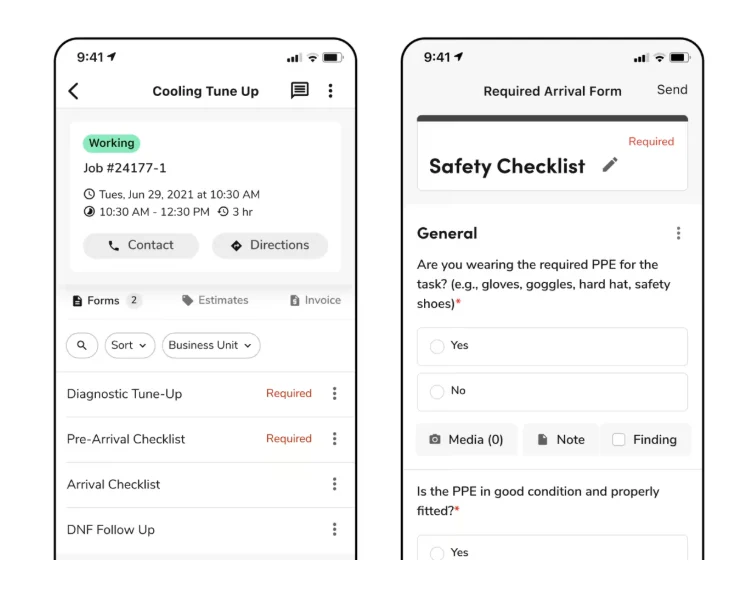
Forms can also be triggered at specific stages of a job.
This means technicians get the right checklist when they need it, not three days later when someone discovers it was never completed.
2. Scheduling and dispatching
A great checklist doesn’t help much if the technician arrives at the wrong time or with the wrong job information.
That’s where ServiceTitan’s connected scheduling and dispatching come in.


ServiceTitan gives dispatchers visibility into technician availability, skills, job requirements, and routing. And technicians also know where they’re going, what they’re servicing, and what information they need before they arrive.
Once in the field, garage door technicians can also access customer and service information on-demand through the mobile app.
The result? Less back-and-forth between the office and the field.
3. Equipment and maintenance history
Here’s where maintenance gets a lot smarter: the checklist doesn’t have to start from zero.
ServiceTitan helps you keep track of equipment information and service history at the customer location, giving technicians immediate access to previous work, equipment details, photos, and other job records via the mobile app.


Technicians can also scan equipment details in the field, including manufacturer, model, and serial number.
This history helps crews understand what has already been inspected, repaired, or flagged before they touch the door.
4. Recurring maintenance and service agreements
Maintenance works best when it’s proactive and not something customers remember after the garage door starts making alarming noises.
With ServiceTitan, you can create service agreements that can organize covered locations, equipment, visits, materials, and related work.


This makes it easier to turn one-time tune-ups into ongoing maintenance.
And instead of relying on sticky notes or calendar reminders, your team has a centralized record of what’s due, where it’s due, and what equipment is covered. This helps improve both operational consistency and customer experience.
5. On-site estimates and approvals
What happens when a routine inspection uncovers a worn cable, damaged roller, or failing component? How long do your customers have to wait to see what the repair will cost?
With ServiceTitan, the answer is zero wait time.
ServiceTitan’s Estimate Builder lets technicians create estimates and present options while they’re still on site.

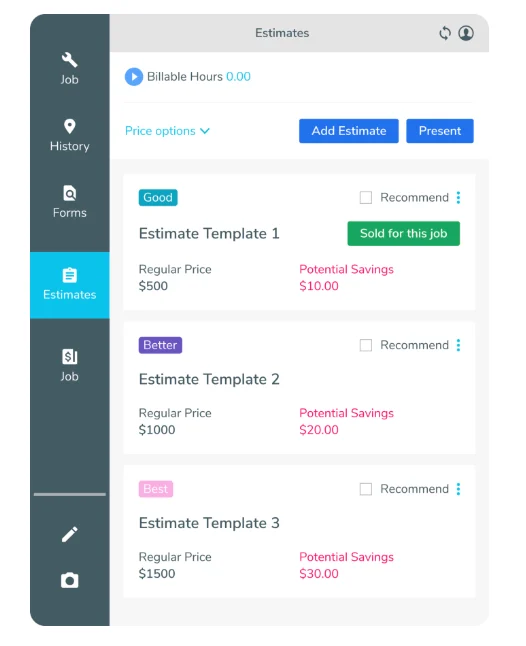
With the Field Service App, they can pull product details, photos, and pricing from supplier catalogs to help customers understand their choices.
This seamlessly turns every maintenance job into the starting point for the next action, whether that’s a minor repair, a replacement, or another scheduled service.
Final Thoughts
A garage door maintenance checklist does more than remind technicians to inspect spring tension or clean the tracks, cables, and safety components.
It creates a repeatable process for catching problems early, documenting findings, and keeping maintenance consistent across every job. And when customized to specific equipment, property, and customer, it becomes even more useful.
But the checklist is only one piece of the puzzle.
With the right technology, garage door businesses can go from managing maintenance as a collection of disconnected tasks to a smooth workflow overseen from a single platform.
Ready to take garage door maintenance from checklists to a connected workflow?
Schedule a call to see how ServiceTitan can help your team streamline operations and deliver better service.
ServiceTitan is a comprehensive HVAC business software solution built specifically to help service companies streamline their operations, boost revenue, and achieve growth. Our award-winning, cloud-based platform is trusted by more than 100,000+ contractors across the country.


