
Templates Guides
Fire Alarm Inspection Checklist: What to Check & How to Prepare
 Fire & Life Safety
October 29th, 2026
ServiceTitan

A fire alarm inspection checklist is a list of system components, inspection tasks, and documentation requirements that technicians use to verify a fire alarm system operates as intended.
This checklist standardizes inspections, catches deficiencies, and documents findings so nothing slips through the cracks.
But what should actually go on the checklist? How do you build one around your technical workflows in the field? And what should your team do when an inspection uncovers a deficiency?
This guide breaks down what to check, how to prepare, and how to handle findings when something isn’t quite right.
What Is a Fire Alarm Inspection Checklist?
A fire alarm inspection checklist is a structured field guide used to document the condition and operation of a fire alarm system during an inspection. This checklist gives techs a consistent way to go through their inspection workflow without relying on memory or scribbled notes.
Depending on the system and scope, the checklist may cover everything from control panels to initiating devices, notification appliances, power supplies, emergency communication functions, and more.
It can also provide space to record test results, deficiencies, corrective actions, and technician observations.
Fire alarm checklists also create a useful paper trail for fire alarm contractors when they need to explain, repair, or report deficiencies.
The #1 newsletter for the trades.
What Are the Components in a Fire Alarm Inspection Checklist?
A reliable fire alarm inspection checklist should mirror the system the technician sees. Here are some components your checklist should cover.
Fire alarm control panel
It’s generally recommended to start a fire alarm inspection at the control panel, which serves as the system’s command center.
A quick visual and functional check should confirm the panel is in normal condition and that its indicators, displays, and controls work as expected.
Here are some things your technicians should check:
Panel condition: Visually inspect for damage, corrosion, loose components, or other signs of deterioration.
Signals and indicators: Verify normal, trouble, and supervisory signals are properly displayed and investigated.
Power supply: Check primary and secondary power sources, including battery condition and connections.
Labels and information: Confirm labeling, zone/device information, and operating instructions are present and legible.
Display and indicators: Check LEDs, screens, annunciators, and other visual indicators for proper operation.
Primary and backup power supplies
A fire alarm system is only as dependable as the power behind it. This is why an effective checklist for inspecting fire alarms should include power source checks.
Technicians must verify that both the normal power source and secondary power supply are online and properly connected.
Check for:
Primary power: Verify the dedicated power source is present, properly connected, and free from visible issues.
Backup batteries: Inspect batteries for swelling, leakage, corrosion, damage, or loose connections.
Connections: Check terminals, wiring, and battery connections for secure contact and signs of deterioration.
Charging status: Confirm the system indicates the batteries are charging or maintaining the expected standby condition.
Testing: Perform applicable battery and power-supply tests in accordance with the adopted requirements and system specifications.
Smoke and heat detectors
Detectors need an unobstructed view of the conditions they are designed to detect.
During inspection, technicians should look beyond whether a smoke detector is physically present and check whether anything could prevent it from responding properly.
Inspect for:
Physical condition: Look for cracks, damage, discoloration, loose components, or signs of tampering.
Cleanliness: Check for dust, dirt, paint, or other contamination that could affect detector performance.
Obstructions: Confirm nothing has been added around the detector that could interfere with smoke or heat reaching it.
Mounting and location: Verify devices are securely mounted and positioned appropriately for the system design.
Functional testing: Test detectors using the appropriate method and equipment when required.
Sensitivity: Where applicable, verify sensitivity remains within the manufacturer’s specified range and applicable requirements.
Manual pull stations
During emergencies, a pull station can only help occupants if they can see it, reach it, and activate it when seconds matter.
A fire alarm inspection checklist should direct technicians to confirm that each station is ready for immediate use and that it communicates properly with the fire alarm system.
Check for:
Accessibility and visibility: Make sure the station isn’t blocked by furniture, equipment, storage, or other obstructions.
Physical condition: Look for cracks, damage, loose components, or signs of tampering.
Mounting: Confirm the station is securely attached and positioned as required.
Labeling: Verify instructions and identification markings are present and legible.
Activation: Operate the station using the appropriate test procedure and confirm the proper response.
Panel communication: Verify that activation sends the expected alarm signal to the fire alarm control panel.
Notification appliances
An alarm can detect a fire perfectly and still fail its most important job if nobody hears or sees the warning.
Make sure that notification appliances (both voice and visual signals) can deliver fire warnings throughout the required areas.
Check for:
Physical condition: Look for cracked lenses, damaged housings, loose components, or other visible deterioration.
Visibility and audibility: Confirm strobes are visible and horns, bells, or speakers are audible where required.
Mounting: Make sure each appliance is securely mounted and correctly positioned.
Obstructions: Check that furniture, partitions, decorations, or other changes haven’t blocked the device.
Activation: Operate the system using the appropriate test procedure and verify each appliance activates as expected.
Annunciators and interface equipment
Fire alarm systems rarely work alone. More often than not, interface equipment connects them to other building systems, so a problem here can ripple beyond the alarm panel.
During inspection, a thorough checklist ensures your techs verify these connections are intact and respond as designed.
Inspect:
Remote annunciators: Confirm displays, emergency lights, controls, and communication with the main panel are functioning properly.
Elevator interfaces: Where applicable, verify fire alarm signals initiate the required elevator recall or functions.
Door interfaces: Check connected door release or access-control functions for proper operation.
HVAC interfaces: Verify applicable alarm signals initiate required HVAC shutdowns or other programmed responses.
Other interfaces: Inspect connections to smoke control, fire doors, dampers, fire sprinklers, and other emergency communication systems.
Wiring, circuits, and connections
All those detectors, pull stations, notification appliances, and interfaces depend on one thing: reliable connections between them.
So a good fire alarm checklist should direct technicians to check that wiring pathways or circuits are intact.
Check for:
Visible condition: Look for damaged conduit, exposed wiring, loose components, or other signs of deterioration.
Connections: Verify that accessible connections are secure and free from visible corrosion or damage.
Circuit faults: Review the control panel for trouble signals or other indications of circuit problems.
Supervision: Confirm applicable circuits and pathways are properly supervised and that abnormal conditions are reported as expected.
Monitoring and communication systems
An effective checklist for fire alarm inspections guides technicians to check what happens after the fire alarm panel detects a problem.
If the system is connected to a supervising or central station, the final part of your inspection should verify that required signals are transmitted and received as expected.
Check for:
Signal transmission: Confirm the communication pathway is operational and capable of transmitting required signals.
Alarm signals: Verify an alarm condition is communicated to the supervising or central station as applicable.
Trouble signals: Check that trouble conditions are communicated and distinguishable from alarm signals.
Communication status: Review the system for communication faults or other indications that could prevent proper signal transmission.
Remember, all testing should follow applicable requirements, system documentation, and monitoring procedures, with coordination where necessary to avoid triggering an unnecessary response.
Pre-Inspection Fire Alarm Checklist
Intentional preparation helps prevent the classic fire alarm inspection-day problems: missing records, inaccessible devices, and someone discovering halfway through testing that the building’s alarm can’t be tested without coordination.
Here’s what should be ready before the technician starts testing.
Review system records and documentation
Your job scheduling department needs to sync with the building rep to ensure they pull together the documents your technician will need before testing begins. This may include previous inspection and testing reports, equipment service records, system drawings, equipment information, and repair documentation.
Once you have these documents, you can then review them for unresolved issues and changes to the system since the last inspection.
For building representatives, this phase is also a valuable opportunity to flag known problems, recent renovations, tenant changes, or areas where devices may have been relocated or obstructed.
The goal is simple: give the technician a clear picture of the system before testing starts.
Notify the appropriate parties before testing
Fire alarm testing can trigger alarms, supervisory signals, elevator functions, HVAC shutdowns, control valves, door releases, and signals to a supervising or monitoring station.
So it’s important (required, even) to notify the appropriate building personnel and coordinate with the monitoring service and other affected parties before testing.
Occupants may also need advance notice to avoid mistaking an inspection for an actual emergency.
Where the system interfaces with other life-safety or building systems, make sure the responsible parties know when testing will occur and what functions may be affected.
Remember, a five-minute warning can prevent confusion.
Confirm access to fire alarm devices
Finally, a technician can’t inspect what they can’t reach.
So make sure your team has access to control panels, annunciators, detectors, pull stations, notification appliances, power supplies, and other system components within the inspection scope.
Check whether restricted areas are unlocked, and identify locations that require ladders, lifts, escorts, or other arrangements.
With the paperwork, people, and access sorted out, you can begin your fire alarm inspection with far fewer surprises.
What Documentation Should Be Included After a Fire Alarm Inspection?
Paperwork is a part of the fire alarm inspection because a thorough report helps someone who wasn’t there understand exactly what happened. This completion record should show what was inspected, what was found, what was tested, and what still needs attention.
This gives building owners, facility teams, and fire alarm contractors a reference point for future inspections and corrective work.
At a minimum, the inspection record should capture:
Inspection details: Property, system, inspection date, technician, and scope of work.
System components inspected: Identify the equipment and devices covered by the inspection.
Test results: Record applicable testing performed and whether components operated as expected.
Deficiencies: Document failed, damaged, missing, obstructed, or otherwise non-compliant conditions, with enough detail to assist understanding of the issue.
Corrective actions: Note repairs completed during the visit and recommendations for outstanding issues.
System status: Clearly indicate whether the system was returned to normal operation or whether impairments remain.
Signatures and acknowledgments: Include required technician, customer, or responsible-party sign-offs.
That said, the exact documentation requirements can vary based on the applicable NFPA requirements, adopted codes, the authority having jurisdiction (AHJ), and system type.
Fire Alarm Inspection Requirements and NFPA 72
With fire alarm inspections, the National Fire Alarm and Signaling Code (NFPA 72) is generally the starting point.
The NFPA 72 establishes requirements for the application, installation, location, performance, inspection, testing, and maintenance of fire alarm and emergency communications systems.
For inspection work, NFPA 72 provides a framework for determining whether system components and functions operate as intended.
Depending on the system, the inspection can include control units, initiating devices, notification appliances, power supplies, supervising station connections, and interfaces with other building systems.
However, NFPA 72 doesn’t operate in isolation.
The safety requirements that apply to a particular property can also depend on the adopted code edition, occupancy, system design, manufacturer instructions, and AHJ. Other standards may apply to specific equipment or systems as well.
So use NFPA 72 as the technical foundation, then verify the requirements that apply to the specific installation and jurisdiction.
How ServiceTitan Supports the Fire Alarm Inspection Process
ServiceTitan’s Fire & Life Safety Software helps fire protection contractors organize fire alarm inspections, manage equipment records, and handle customer reporting from a single platform. By connecting office and field workflows, it also helps teams keep track of fire alarm systems at different customer locations and manage any follow-up work.
1. Recurring fire alarm inspection scheduling
Fire alarm systems need regular inspections, and keeping track of due dates gets harder as your customer base and equipment inventory grow.
ServiceTitan automates this process by generating upcoming service events based on the inspection frequency you define. Your office team can view these events in Follow Up and book them as jobs when they’re due.
What does this do? Keeps your teams organized, schedules inspections on time, and reduces the reliance on separate calendars or spreadsheets.
2. Custom digital fire alarm inspection forms
Fire alarm inspections involve checking multiple devices and documenting their condition, test results, and any problems found during the visit.
With ServiceTitan’s Inspection Forms, you can build digital checklists that match your inspection procedures. Conditional fields can appear or disappear depending on earlier responses, helping technicians focus on the information relevant to each inspection.

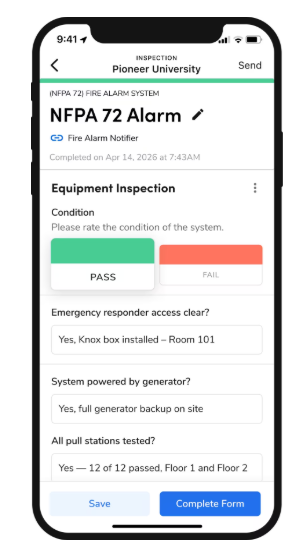
Completed forms remain connected to the relevant job or equipment record, so office staff can access inspection findings without collecting paperwork from the field.
3. Fire alarm equipment and asset tracking
Commercial fire alarm systems can include many individual components, from smoke detectors and manual pull stations to control panels. Accurate equipment identification is essential for keeping inspection and maintenance histories organized.
With ServiceTitan’s Equipment Scanning feature, technicians scan a barcode or QR code to access the corresponding equipment record. Nameplate Scan can also capture details such as manufacturer, model, and serial number.

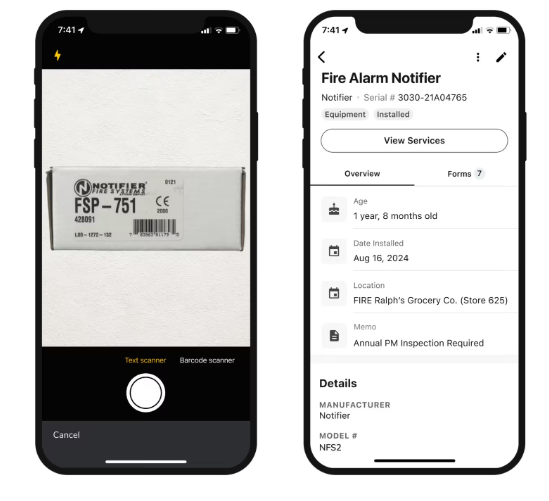
With this information readily available, technicians can review previous service activity, link inspection findings to the correct equipment, and maintain consistent records across repeat visits.
4. Deficiency tracking and follow-up
Technicians must document (and address) every issue they identify, such as damaged devices, faulty components, or other inspection deficiencies.
ServiceTitan lets techs record problems in the field using notes and photos. Your team can assign ownership, monitor deficiency status, and send customers automated notifications about open issues and pending approvals.

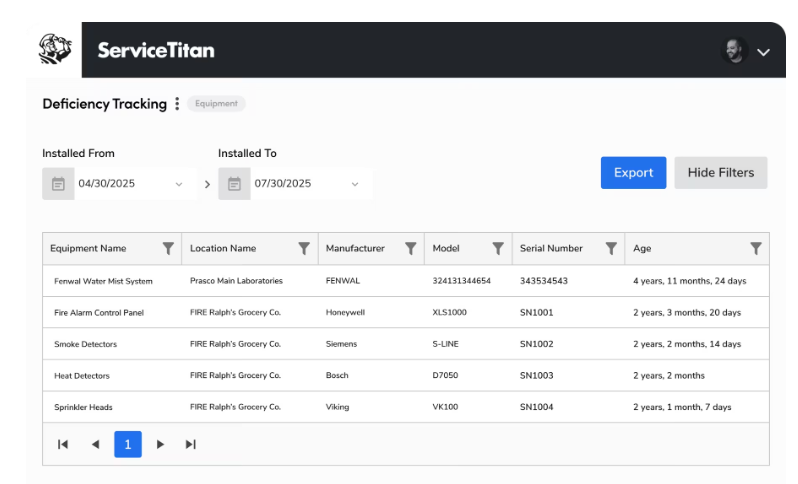
The platform also generates repair quotes from deficiencies recorded during inspections, which aids office teams in coordinating follow-up work without manually re-entering the same information.
5. Photo and signature capture
Most of the time, written notes do not tell the full story. In this case, photos can provide useful evidence of damaged devices, obstructed access, or other issues requiring attention.
Techs can attach photos to job records in ServiceTitan alongside inspection information. They can also collect customer signatures directly on digital forms when required.
Keeping these details together helps your team maintain more complete records of what technicians observed, documented, and discussed during each visit.
6. Compliance documentation and customer reporting
Once technicians complete an inspection, they need to organize the findings into documentation that customers and (if applicable) AHJs can review.
ServiceTitan turns inspection data into AHJ-ready reports, reducing the need for your staff to reconstruct information already collected in the field. These inspection records remain readily accessible for customer requests, follow-up work, and documentation reviews.

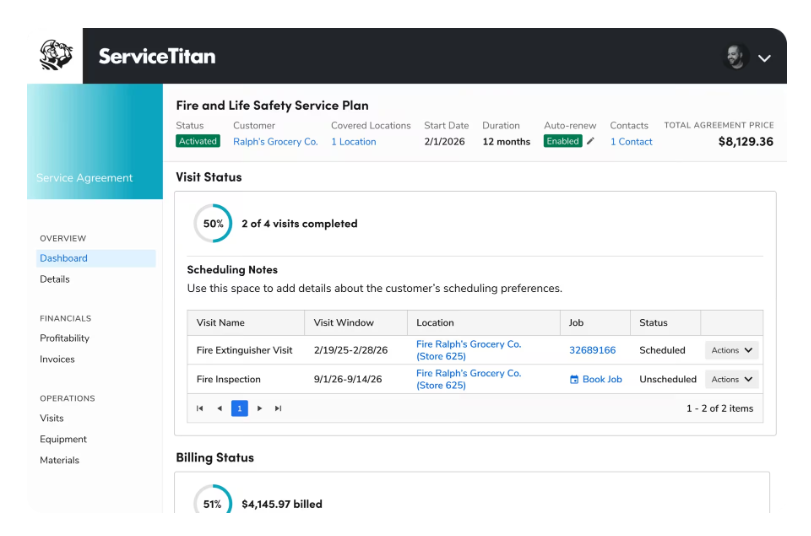
Report requirements vary by jurisdiction and inspection type, so always confirm that your forms and reporting workflow meet the applicable fire code and AHJ requirements.
Over to You!
A fire alarm inspection is more than walking around the building and checking boxes. And that’s why fire protection contractors need a reliable process that ensures comprehensive checks every time.
This guide provides a clearer picture of what a thorough fire alarm inspection involves, from checking panels to detectors and notification appliances. It also explains how to prepare the building before testing and what information belongs in the final inspection record.
But more importantly, your fire alarm checklist should give techs a repeatable process so they don’t miss critical details.
ServiceTitan also helps fire alarm contractors connect these inspections to scheduling, digital forms, deficiency tracking, reporting, and follow-up work. Schedule a demo to see how.


Frequently Asked Questions (FAQs)
Q1. How often should fire alarm systems be inspected?
Inspection frequency depends on the system, applicable requirements, and jurisdiction. NFPA 72 establishes inspection and testing requirements for fire alarm systems, but the specific schedule can vary by system type and conditions.
Q2. Why are fire alarm inspections important?
Fire alarm inspections help verify that critical system components remain in proper operating condition and identify deficiencies before they become more serious problems. They also provide documented evidence of the system’s condition and support compliance with applicable codes, standards, and AHJ requirements.
Q3. What are common fire alarm inspection deficiencies?
Common deficiencies include dirty or obstructed detectors, damaged notification appliances, inaccessible pull stations, battery problems, trouble signals, communication faults, damaged wiring, missing or outdated labels, and issues with system interfaces. Once identified, document deficiencies clearly so the responsible party can take appropriate corrective action.
Q4. What is the difference between fire alarm inspection and testing?
Inspection primarily involves examining the system and its components to identify visible conditions, damage, accessibility issues, and other deficiencies. On the other hand, testing involves operating or evaluating components and functions to verify they perform as intended.
Q5. How long does a fire alarm inspection take?
There is no universal inspection time. Fire alarm inspection duration depends on system size, number and type of devices, building layout, accessibility, interfaces, documentation, and any deficiencies discovered.
