


HVAC service calls are calls customers make to an HVAC business to schedule service, whether to repair, maintain, or install heating, ventilation, and air conditioning systems.
To respond to service calls effectively, you must first understand how to approach each call type, the resources required, and the estimated time to complete the service. Without this clarity, your dispatch, inventory, and technician productivity suffer.
In this post, we'll break down the key types of HVAC service calls, what they entail, and how to respond to each one.
We’ll also explore how successful businesses like yours use ServiceTitan to manage service calls and ensure technicians always leave for the job site with the necessary tools and parts.
What Happens After an HVAC Service Call?
An HVAC service call prompts a visit by technicians to diagnose, maintain, or repair the heating, ventilation, or air conditioning system that led to the service call.
While each call is unique, most HVAC service requests follow a similar pattern:
It all begins with the customer's initial call reporting a problem with their AC or heating unit. The customer service team documents the issue, capturing vital details, before assigning the most qualified technician to the task.
On the job site, the technician will inspect the unit to investigate the root cause of the system malfunction.
After inspecting the unit, they’ll explain the issue to the customer. If they’re okay with the cost and approach for fixing the issue, the technician will proceed with the necessary repairs.
Afterward, the technician outlines the repairs made and offers advice on maintenance measures to prevent future issues.
In some cases, service calls may deviate significantly from this pattern. We’ll cover such cases as we explore the various types of HVAC service calls.
The #1 newsletter for the trades.
What Are the Different Types of HVAC Service Calls?
There are various types of HVAC service calls, depending on the customer's needs, the urgency of the situation, and the purpose of the visit.
Some key types of HVAC service calls are shown in the image below:


Emergency service calls
Emergency service calls are the most urgent, unscheduled requests.
These happen when an HVAC system unexpectedly fails, leaving customers in immediate distress.
Because these breakdowns typically occur during critical, extreme weather conditions—like a furnace dying on a freezing winter night or an AC unit collapsing in the middle of a summer heatwave—they simply can't wait.
HVAC companies that operate 24/7 prioritize these requests over routine calls. Technicians arrive equipped to troubleshoot quickly and either permanently fix the issue or provide temporary relief.
Diagnostic service calls
When a customer notices something is off—such as unusual noises, weak airflow, inconsistent room temperatures, and high energy bills—they'll request a diagnostic service.
During the visit, the technician carefully inspects various components, such as the compressor, thermostat, and fans. After diagnosis, the technician explains the findings to the customer, states possible solutions, and provides an estimate for repairs.
Maintenance calls
Preventive maintenance calls are pre-scheduled visits to proactively service customers' HVAC systems on membership plans. This helps prevent system failure, extends the system’s lifespan, and identifies minor issues before they become costly repairs.
Some of the tasks performed during a maintenance call include:
Lubricating moving parts
Cleaning or replacing air filters
Testing thermostat accuracy
Cleaning condensate drains
Tightening the electrical connection
Installation or replacement calls
If a system breaks down beyond repair or reaches the end of its lifespan (usually between 10 and 15 years), the customer will make a replacement call for a technician to replace it.
The HVAC technician visits the home or building to assess the space and recommend the right unit. They will then remove the old unit (if applicable) install the new one, test its performance, and guide the customer through the basics of usage and maintenance.
Installation calls are dedicated to the setup and integration of new HVAC systems. These are essential for new home constructions and significant renovations.
Follow-up or warranty calls
Follow-up calls are generally made after a previous repair, maintenance, or installation call. Although the timing varies, they are an opportunity to confirm if the system is working correctly.
Warranty calls are initiated when a customer reports a problem that's covered under the manufacturer's or contractor's warranty. Technicians may also be dispatched for warranty calls if a manufacturer issues a recall for a specific part or model.
Depending on the warranty terms and conditions, repairs or replacements may be completed at no additional cost.
What Are Some Common Reasons for HVAC Service Calls?
Although technicians encounter a variety of issues during service calls, most of them can be attributed to a set of common problems. Knowing the frequent culprits helps you stock the right parts and train technicians to troubleshoot quickly.
Here are some of the common reasons for HVAC service calls:
Clogged filters: This issue occurs when dust, dirt, pet dander, and other airborne particles accumulate on the filter, blocking the airflow into the HVAC system.
Electrical issues: Over time, components wear out, connections can loosen due to vibrations, power surges can occur, and even pests can chew through wiring.
No cooling: The air conditioning system is running, but the air it produces isn't cold, or the unit simply fails to lower the indoor temperature to the desired setting.
No heating: The heating system (furnace, heat pump, or boiler) is running but fails to produce warm air or cannot raise the indoor temperature to the desired level.
What Does an HVAC Service Call Include?
A successful response to an HVAC service call begins with your customer service representatives (CSRs). They are the first point of contact, and they set the stage for the entire service experience. To do this, CSRs ask targeted questions, such as:
“What is the issue?”
“How long has this been happening?”
“How old is the unit?”
“What is the make and model of your HVAC system?"
"Have you noticed any unusual noises, smells, or leaks?"
"Have you tried any troubleshooting steps, like changing the filter or checking the thermostat settings?"
"Is the unit completely shut down, or is it running but not providing heating/cooling?"
"When was the last time your system was professionally serviced?"
This initial call doesn’t guarantee that the caller will eventually decide to use your services. CSRs can improve the odds of that happening by connecting with the customer and making a positive first impression.
However, providing such a positive first impression is difficult if your CSRs are facing challenges. It's hard to truly connect with a distressed customer if the CSRs:
Ask the wrong questions or fail to gather crucial details, resulting in wasted time on-site.
Fail to pay close attention to the customer's exact needs because they're fumbling with the keyboard, trying to find the right fields to take notes in a clunky system.
Lack access to customer history, making it challenging to offer personalized service or see past issues.
This is where a tool like ServiceTitan's Call Booking platform can make all the difference.
When a call comes in, ServiceTitan instantly compares the incoming phone number against your customer database. If it's a returning customer, their complete history pops up on the CSR's screen. This includes their name, address, past service visits, equipment details, property details, and any previous notes.
CSRs can then use this information to deliver personalized service.
They can greet the customer by name, ask about their satisfaction with a previous service visit, and even recommend relevant offers after the call.


On this same interface, customizable drop-down menus and prompts guide your CSRs through the call. This ensures they consistently ask the right questions and capture all the essential information technicians need to complete the job successfully.
If you've uploaded your company's proprietary HVAC call script, it will also appear here, ensuring CSRs follow your structured question paths designed to convert callers into satisfied customers.


As the call proceeds, ServiceTitan automatically records it in the background.
When the call ends, you have a complete record for quality control, training, and reviewing any details as needed. This ensures nothing is missed and provides valuable insights to improve your team's performance.
ServiceTitan's benefits extend well beyond the initial call booking. It also provides powerful support for technicians responding to the service call.
How Can ServiceTitan Help After an HVAC Service Call?
Here's how ServiceTitan can help technicians responding to service calls:
1. Techs arrive fully informed

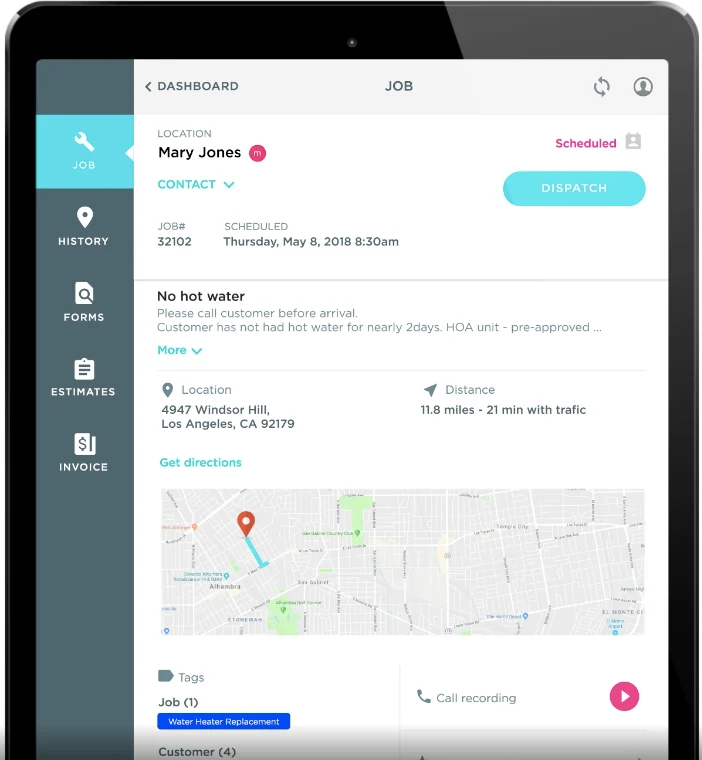
ServiceTitan offers a mobile app that syncs with your office system. When a customer calls in, and your CSRs take down their information (such as name, address, notes, and problem details) the information is automatically shared with the assigned technician through the mobile app.
That way, before techs head out, they already know:
Who the customer is.
What the issue might be and the work scope.
Any past conversations or special requests. They can even listen to a recording or read call scripts of the initial phone call if they need more context.


2. Techs have all relevant document information

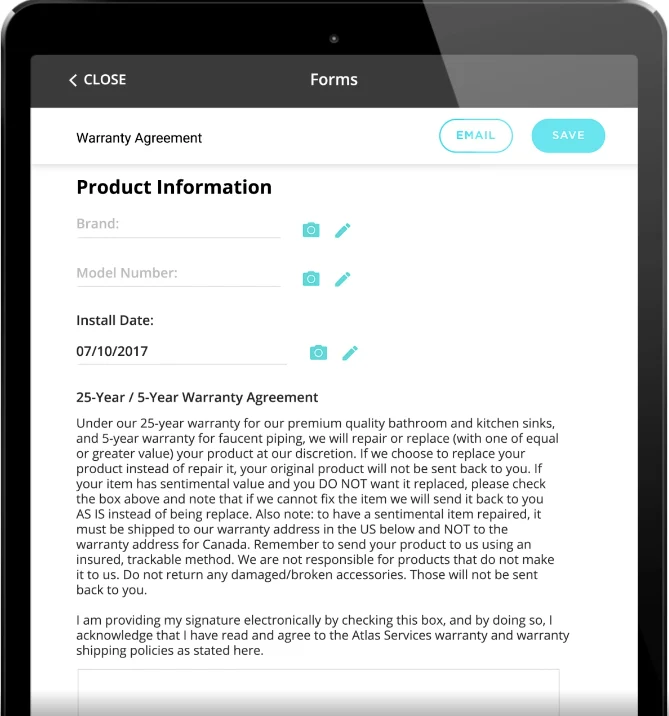
Historically, managing paperwork in the field has been a headache for HVAC companies.
Technicians may forget to complete essential forms, misplace critical documents, or submit paperwork incorrectly, resulting in delays, invoicing errors, and frustrated customers.
With ServiceTitan, these paper-based challenges are eliminated. All necessary forms—from inspection checklists to warranty registrations and invoicing templates—are fully digitized and accessible directly within the technician's mobile app.
This means your techs always have the right forms at their fingertips, ensuring accurate, complete, and timely documentation for every job.
3. Techs can suggest upsells and invoice before they leave
Before technicians leave, they can review the property description in the Field Service App to identify other issues that can be used to upsell the customer.


Let’s say they discover the house has an attached garage and an estimated market value of over $1 million. This immediately gives the tech valuable insights.
They can suggest installing or upgrading a carbon monoxide (CO) detector to prevent CO from leaking into the living space from vehicles. And since it’s a high-value home, they can discuss installing a smart thermostat and upsell a membership plan by emphasizing the long-term savings and increased comfort it brings.
After the service is concluded, technicians can create invoices on the job site using ServiceTitan. The invoice includes a breakdown of the work completed, the amount due, and a link or button for customers to make a payment easily.
ServiceTitan allows technicians to collect card, cash, and check payments, which automatically reflects in your accounting system.


How Many Service Calls Do HVAC Contractors Receive Per Day?
The number of service calls HVAC contractors receive daily varies with the season, local demand, the size of the company, and the company's scheduling and dispatch.
During peak seasons—such as winter and summer—contractors can receive anything from 10 to 15+ service work requests per day, especially if they serve both residential and commercial clients. Larger companies with multiple techs and dispatchers can handle even more, while smaller operations may focus on just a few high-quality calls daily.
Successful contractors use scheduling tools and mobile apps like ServiceTitan to manage service calls, reduce wait times, and keep techs fully booked without burning them out.
Ready to check out ServiceTitan? Click here to see how it works.
ServiceTitan is a comprehensive solution that helps HVAC contractors streamline dispatching, track technician performance, automate follow-ups, and uncover new opportunities.
The platform is trusted by thousands of HVAC professionals nationwide. ServiceTitan is built to reduce inefficiency and guesswork, and ensure every service call runs smoothly.


ServiceTitan HVAC Software
ServiceTitan is a comprehensive HVAC business software solution built specifically to help service companies streamline their operations, boost revenue, and achieve growth. Our award-winning, cloud-based platform is trusted by more than 100,000+ contractors across the country.


