

Templates Guides
Construction Risk Management Template: Free PDF Download
 Construction
April 24th, 2026
ServiceTitan


Construction risk management is the process of identifying potential risks and hazards in construction project workplaces.
Assisting this process, a construction risk management template is a standardized document used to record and track identified risks.
The key components of a construction risk management template include:
Project information
Risk identification
Risk analysis
Risk response
This article focuses on construction risk management templates, explaining what they are, what they should contain, and the common mistakes contractors make when creating them.
We also include a bonus section highlighting key ServiceTitan features that help construction businesses build accurate, professional risk management plans faster.
Why Use a Construction Risk Management Template?
A construction risk management template functions not just as a checklist but also as a definitive record of accountability. It is documented proof that a company actively upheld its legal and ethical safety responsibilities.
Other benefits of construction risk management templates, making them indispensable to managing successful projects, include:
Risk mitigation: A construction risk management document helps you identify risks in advance and develop plans to address them. Instead of a project delayed by a supply chain disruption or unfavorable weather conditions, you’ll always have a 'Plan B' to minimize the impact of such events.
Ensuring safety and compliance: A template ensures that safety protocols aren't just verbal suggestions but documented requirements. In case of any issues, this provides an audit trail proving you’ve complied with all regulations. In addition, it helps you cross-reference site activities with OSHA or local building codes, preventing costly regulatory issues.
Financial predictability: By identifying financial risks (such as material price hikes) early, you can develop realistic alternative plans. Also, you can show a detailed risk log to insurers, which puts you in a much better position to negotiate premiums.
Client trust: Transparency is the fastest way to build a relationship with a project owner. When you present a client with a comprehensive risk log, you demonstrate your ability to keep projects under control. This gives them peace of mind knowing that you’ve already thought about the risks and unforeseen situations. It also makes clients view you as a professional.
The #1 newsletter for the trades.
Who Uses Construction Risk Management Templates?
These templates are typically created and used by construction project managers and supervisors.
However, construction risk management is a shared responsibility. Every member of the construction team plays a role in identifying, assessing, and mitigating risks, so these templates can be used by anyone.
Here are the various ways team members use these templates for residential and commercial construction projects:
Project managers use the risk management template to stay ahead with schedules, manage budgets, and ensure resources are allocated to those areas with the greatest risks.
Site supervisors use the risk management template to ensure all workers comply with established regulations and precautions designed to mitigate risks.
Safety officers use the risk management template to identify high-hazard activities (such as crane lifts or deep excavations) and ensure specific mitigation steps like specialized training or additional PPE are documented and enforced on-site.
Contractors and engineers use the risk management template to plan work efficiently and coordinate with other trades. It also helps them address potential issues, such as material delays or site constraints, before they impact the project’s progress.
What Risks Do Construction Risk Management Templates Cover?
Construction risk management templates offer comprehensive coverage of key risks. These include:


1. Financial risks
Financial risks include all events that negatively affect the project's budget, profit margins, or cash flow. They often originate from market fluctuations or poorly calculated estimates.
Risk management helps predict potential financial challenges based on the project’s requirements. These can include slow payments, market volatility, budget overruns, and liquidity issues.
After these financial risks are identified, whoever is in charge of the risk management plan should then create a mitigation proposal. For example, they may:
Build contingency funds into the project budget to absorb unexpected costs.
Negotiate fixed-price contracts with suppliers to reduce exposure to material price fluctuations.
Establish clear payment terms and milestone-based billing to minimize cash flow delays.
Prequalify subcontractors to reduce the risk of financial instability disrupting the project.
Regularly review cost forecasts to identify and address overruns early.
2. Legal risks
These risks arise when a project fails to comply with legal and regulatory requirements. Legal issues may also occur if a project overruns the agreed completion due date because of unforeseen delays, such as adverse weather conditions or fluctuations in material costs.
To reduce legal risks, the template should outline the rules and regulations governing the project, and specify the parties responsible for ensuring those rules are followed.
It should also contain procedures for mitigating contractual disputes and possible regulatory penalties or fines. Such procedures can include insurance and retainer fees for legal experts.
3. Operational risks
Operational risks refer to the day-to-day issues that can disrupt the execution of a project. These risks are also known as project risks because they’re directly linked to project management and the effectiveness of planning and coordination.
When developing a construction risk management template, key operational risks to consider include labor shortages, equipment failure, supply chain delays, and inadequate resource allocation.
4. Environmental risks
Environmental risks refer to the impact that environmental conditions can have on project timelines and overall progress. In construction, these are often described as 'acts of God' in builders’ insurance policies.
When identifying environmental risks, two key levels must be considered. The first includes common weather-related disruptions like heavy rain, snow, strong winds, and lightning strikes. The second level involves location-specific environmental hazards, such as earthquakes in fault-line regions, tornadoes, wildfires, or flooding.
Both levels of risk must be carefully assessed during project planning.
In addition, it’s essential to review and comply with environmental regulations set by the relevant authorities in the project’s location. Adhering to these regulations is a critical first step in mitigating environmental risks.
5. Worker safety risks
Worker safety is a fundamental component of any effective risk management strategy. Embedding safety measures in the project’s risk management plan helps you anticipate and avoid incidents instead of merely responding to them after they occur.
A well-structured management plan ensures safety guidelines are integrated into standard operating procedures and promotes a safer work environment.
What Is Included in a Risk Management Template?
Construction projects differ in the types of risk exposure. But regardless of the project type, there are some basic sections every risk management template must include, such as:
Project information: This section sets the context for the entire risk strategy. It includes the project name, location, and key stakeholders (such as the architect, lead contractor, and client). More importantly, it defines the project scope and project timeline, as these details determine which risks are most prevalent.
For example, a project located in a coastal region during hurricane season will have a different project profile from an indoor renovation in a desert environment.
Job description: The job description within a risk template outlines the specific responsibilities and technical tasks to be performed. It breaks the project down into phases (excavation, structural framing, and building, for instance) and then outlines the risk present in each phase.
Risk register: The risk register is the central piece of the template. The document lists all potential threats. Each entry typically includes a Unique ID, a Risk Category (safety, financial, etc.), and a detailed description of the event. This section also includes the severity score, calculated by multiplying the event's probability by its potential impact on the project’s budget or schedule.
Mitigation plan: This section details the specific actions the team will take to reduce the likelihood of a risk occurring in the first place. For instance, if the risk is 'on-site falls,' the mitigation plan might mandate installing temporary guardrails and conducting weekly safety training.
It also assigns mitigation plans to the individuals responsible for ensuring these preventative measures are carried out.
Contingency plan: While mitigation is 'Plan A,' the contingency plan is 'Plan B.' This section outlines what the team will do if the risk becomes a reality despite preventative efforts. It includes pre-approved emergency budgets, secondary supplier lists, and recovery schedules.
By putting a contingency plan in place, the project team can respond immediately to a crisis, such as a sudden material shortage or equipment failure, without it affecting the delivery timeline.
Download our free template to easily identify, assess, and mitigate potential risks.
How Does a Construction Risk Management Plan Work?
The workflow begins with risk identification, where teams uncover potential threats to safety, budget, and schedule. Threats are assessed and analyzed to determine their likelihood and impact.
Next is evaluation and prioritization. Managers rank these risks by priority to focus on those that may significantly impact the construction schedule. After this, teams determine the best strategy for each risk: whether to avoid, mitigate, transfer, or accept it.
With strategies in place, the management team implements safety measures and action plans to reduce risks and address potential issues. Then, the team regularly checks and updates the plan to deal with any new risks that arise, helping the project stay on track until it’s completed.
How Do You Identify Construction Project Risks?
Risk identification begins with site inspections. Managers walk the grounds to spot immediate hazards, such as unstable soil or logistical bottlenecks. They also analyze historical data from past projects, which reveals recurring patterns in cost overruns or weather delays.
Finally, stakeholder input gathered from architects, engineers, and subcontractors uncovers technical or contractual risks that a single perspective might miss.
Combining these methods ensures a comprehensive view of potential risks, so teams document every variable before the project begins.
How Do You Assess Construction Risk Severity?
To assess construction risk severity, you compare the likelihood of a risk occurring with the severity of its effects. This involves considering two related, but distinct dimensions for measuring risk:
Likelihood measures the probability that the event will occur.
Impact measures how much that occurrence would affect safety, cost, or the project schedule.
Each factor is given a number, usually from 1 to 5. These numbers are then multiplied (Likelihood × Impact) to get a total risk score.
The scores are placed on a risk heat map, which helps managers see which risks are most serious.
Risks with high scores need immediate action or extra funding to manage them. Risks with low scores only need to be monitored.
For example, imagine you’re managing a building project during the rainy season. One of the risks you’re considering is heavy rain.
First, you’ll assess the likelihood. Since it’s the rainy season, heavy rain is quite common. Therefore, a likelihood score of 4 out of 5 (likely to occur) is in order.
Next, you’ll assess the impact. If heavy rain occurs, work may stop for several days, causing delays and extra costs. However, it may not completely stop the project. So, the impact could be assessed as 3 out of 5 (moderate impact).
Now, you’ll calculate the risk score:
Risk score = Likelihood × Impact
4 × 3 = 12
A score of 12 would fall into a medium-to-high-risk zone on the heat map. This means managers should take action, such as:
Adjusting the schedule
Adding weather protection
Setting aside contingency funds
Conversely, a risk of a minor tool shortage, with a total risk score of just four, only requires monitoring, rather than urgent action.
This approach helps you dedicate time and resources to the most critical risks that affect the project the most.
What Is a Construction Risk Matrix?
A construction risk matrix is a visual tool that plots risks on a graph to determine their overall severity.
One axis represents likelihood (probability) while the other represents impact (consequences). By intersecting these two values, the matrix categorizes risks into color-coded zones: low (green), medium (yellow), or high (red).
Here is an example...


Source: Ideagen Machine Safety
This visualization provides a standardized framework for decision-making, ensuring the team prioritizes resources on the major risks while maintaining a clear view of the project's total risk profile.
How Is Risk Assessment Different From Risk Management?
Risk assessment is one part of the wider risk management process. It focuses on identifying potential hazards, analyzing them, and estimating how likely they are to happen and how serious their impact could be.
Risk management, on the other hand, is the complete process. It includes risk assessment but goes further by putting control measures in place and continuously monitoring the project to reduce or manage risks.
The two processes work together in a cycle. Risk assessment identifies and measures the problems, while risk management takes action to address them.
Without assessment, management lacks direction. Without management, assessment is simply a list of risks with no solutions.
Common Mistakes in Risk Management Plans
Failing to maintain a consistent approach can turn a risk management plan into a liability. Here are the most common practical errors to avoid:
Vague risk ownership: Assigning responsibility to the team rather than a named individual does not ensure accountability. Without a specific owner to handle mitigation, identified risks are often ignored until they become crises.
Poor communication: Risk strategies often remain on paper. If the field crew is unaware of the mitigation protocols, the plan fails to protect the people on-site.
Ignoring lessons learned: Failing to review data from past projects or 'near-miss' incidents leads to the repetition of costly mistakes. A plan that doesn't evolve based on experience will lead to future failures.
Outdated risks: Treating the risk register as an unchanging document is a major error. Risks change as a build progresses, and a plan that isn't updated weekly becomes irrelevant.
How ServiceTitan Supports the Construction Risk Management Process
Construction risk management consists of three main components: identifying risks, implementing mitigation strategies, and activating contingency plans when necessary.
The first step of risk identification can be effectively supported by using a template, as it provides a structured way to record and categorize potential risks. However, implementing mitigation measures and contingency plans requires more than a static template. These stages demand active coordination, communication, and regular updates.
That’s where ServiceTitan comes in handy.
It helps construction teams create and implement risk management plans by providing the following functionalities:
1. Centralized document management
ServiceTitan allows teams to upload plans, permits, and contracts to a centralized folder for each project. This eliminates the danger of technicians working from outdated blueprints or missing critical site instructions.


It also includes built-in version control that instantly notifies the entire team when a change order is issued. Once there’s an update based on the change order, the platform records when, why, and by whom the change was made.
This reduces legal exposure and helps you resolve billing disputes before they escalate.
2. Real-time budget visibility
Imagine spending money on a project, thinking you still have enough budget left, only to realize halfway through that you’ve already overspent. This happens when there’s a difference between the planned budget and the actual amount spent. If you track finances manually, these differences can be hard to notice early.
ServiceTitan solves this problem with its ‘Budget vs. Actual’ summary report. It clearly shows how your actual expenses and billed amounts compare to your original budget, helping you to stay in control of project costs.
From the report, you can see at a glance the amount you’ve spent on each expense category, the amount budgeted, the variance between both figures, and the percentage of the budget used.


To dig deeper, click each category to view the line items that contribute to the overall cost. This visibility eliminates missed signs, a common issue with monthly manual reporting. At the same time, managers can identify budget overruns while there’s still time to get alternatives.
Jonathan Beyer, vice president and manager of Beyer Boys’ installation departments, says this feature has been a game-changer for the company.
Instead of uncovering budget discrepancies weeks later due to delays caused by paper-based processes, his team can now access real-time cost data for every project in a single centralized location.
“'On the construction side, it’s been a great feature to have. You can see a live job-costing report every single day,” he says in a webinar recap.
“You’re not having to wait for a job-costing report at the end of the month or every two weeks.”
3. Professional proposal generation and delivery
Because ServiceTitan is a comprehensive job management tool, its proposal functionality connects directly with project planning.
This integration helps contractors determine the labor and materials required for each project and procure them before work begins. It also allows supervisors to plan projects days, weeks, and even months in advance, assigning each task to specific employees.

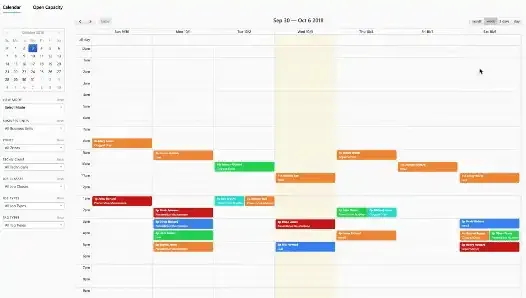
This level of planning ensures that the right people and materials are available at the right time, reducing delays and improving overall project efficiency.
4. Controlled change management
ServiceTitan improves change management by replacing verbal agreements with formal processes such as RFIs, submittals, and change orders. This means all changes to the project must be properly requested and approved in writing.
Every request is recorded digitally, creating a clear history of what was requested, when it was requested, and who approved it. This reduces misunderstandings and makes it easier to resolve disputes with general contractors and project owners.

Clear documentation also ensures any additional labor or materials are properly tracked and billed. This protects profit margins and maintains accountability throughout the project.
Over to You!
Staying ahead of risks is what separates businesses that make money from those that barely get by.
When you move your risk plan out of a dusty binder and into a digital tool, you’re ready for whatever surprises the jobsite throws at you.
This is what ServiceTitan can do for you. Book a demo today to proactively manage risks and keep your projects on track.
ServiceTitan is a robust digital tool designed specifically to help construction firms deploy active risk-management templates and significantly improve the long-term stability of their projects. Our powerful, data-driven system is used by numerous expert tradespeople, who have boosted their profitability by an average of 25 percent in their first year with us.


