


In 2026, the HVAC industry continues to face evolving supply chain challenges. Fluctuating material costs, component shortages, and global shipping delays are only a few obstacles HVAC companies must overcome if they want to stay ahead.
To navigate these turbulent times, HVAC contractors must adopt proactive strategies that improve visibility, flexibility, and efficiency across their supply chain.
What this means is leveraging technology to forecast demand more accurately, building stronger relationships with suppliers, and maintaining smarter warehouse and truck inventories.
In this article, we explore key supply chain issues impacting HVAC pros, as well as practical solutions to help you stay resilient, agile, and ready for this year and beyond.
What Are the Main Causes of HVAC Supply Chain Disruptions?
HVAC businesses will continue to feel the impact of a volatile supply chain, from fluctuating raw material availability to unpredictable shipping times.
Here’s what you should expect:


Now let’s take a look at each issue.
The #1 newsletter for the trades.
Raw material shortages
If you work in the HVAC industry, you know that materials like aluminum, steel, or copper are indispensable for your trade. Yet these resources are very hard to find and when you do find them, they can be very expensive.
In short, when raw materials are scarce, manufacturers struggle to keep up with production demands, leading to longer waiting times for parts such as coils and compressors.
This shortage forces HVAC companies to plan purchases and projects well in advance.
Global shipping delays
Supply chains are disrupted on a global scale due to aging freight drivers, port congestion, transportation bottlenecks, and limited cargo capacity. With HVAC parts sourced overseas, manufacturers often face unpredictable lead times, making it difficult for contractors to maintain a consistent inventory.
Labor shortages
One of the biggest challenges the HVAC industry faces is the technician shortage, from factory workers to skilled field technicians. This means fewer available workers, which leads to slower production, shipping, and service delivery.
Even manufacturing suffers. Limited staffing can reduce output and create production backlogs for critical components. Fewer transportation workers lead to delivery delays and inconsistent distribution schedules.
Not only do HVAC contractors experience delayed parts, but they’re finding even fewer qualified technicians available to complete installations and repairs on time. Aside from extended project timelines, businesses see an increase in operational costs as they must compete for skilled workers.
Increased demand
A few years ago, the COVID-19 pandemic caused supply chain disruptions in every industry. And many of them still feel its repercussions today.
Not only that, but the aging infrastructure also causes people to replace their old HVAC units. More and more people invest in energy-efficient systems, yet the demand is driven beyond supply capacity.
The HVAC industry is also seasonal. Customers are more likely to buy a unit in summer, further straining inventory levels as demand is higher during this season.
Tariffs and regulations
Tariffs, trade policies, and evolving environmental regulations play a major role in shaping the HVAC supply chain. For example, when new tariffs or trade restrictions are introduced, it leads to a significant increase in the cost of materials and components.
Trade tensions can also cause uncertainty in sourcing, making it difficult for HVAC businesses to plan inventory or predict lead times. Don’t forget about the strict environmental regulations, such as those targeting industries with high global warming potential. Manufacturers must redesign equipment to meet updated compliance requirements, sometimes even from scratch.
What Materials Are Most Affected by HVAC Supply Shortages?
Several essential materials and components remain in short supply across the HVAC industry, stemming from global demands, production constraints, and shifting regulations.
Here’s a list of key materials/components:
Semiconductors: A shortage that started with the COVID-19 pandemic is still going strong. Used in smart thermostats, control boards, and variable-speed systems, chips are in limited supply due to high demand across multiple industries.
Copper: Copper is used for coils and wiring. Its pricing and availability fluctuate due to mining slowdowns and strong demand for renewable energy.
Steel: Steel faces continued shortages tied to energy costs and global production limits. It’s widely used in HVAC cabinets, ductwork, and compressors.
Refrigerants: Old refrigerants are quickly becoming obsolete. But the slow adoption of new, low-GWP (global-warming potential) alternatives has caused intermittent shortages and higher costs.
Next up, let’s talk about equipment shortages.
What Are Common HVAC Equipment Shortages in 2026?
HVAC companies don’t just face material and component shortages—they also struggle to source certain equipment due to high demand.
Equipment shortages include:
Heat pumps: The rising popularity of energy efficiency and electrification initiatives has left production outpaced by demand, leading to long lead times.
Air conditioning units: Believe it or not, there aren’t enough AC units for everyone. Paired with increased summer demand and shortages of compressors and refrigerants, the shortage has slowed the availability of both residential and commercial units.
Furnaces: Steel and component shortages, along with high winter demand, make it difficult for suppliers to keep furnaces in stock.
Tankless water heaters: Limited production capacity and supply chain bottlenecks for critical components have created delays in delivery.
Smart thermostats and controls: A shortage of chips and semiconductors has restricted HVAC companies’ ability to install advanced controls.
We mentioned that these shortages affect the cost of equipment and materials. Let’s see how.
How Do Supply Chain Issues Affect HVAC Prices?
Rising costs are hitting the HVAC industry hard, with the supply chain disruptions leading to significant price increases. Factors such as raw material shortages, labor constraints, and new tariffs have contributed to these hikes.
In short, according to Mar-Hy distributors, HVAC equipment prices have increased by approximately 40 percent, driven by raw material costs (metal product prices are up by 42.07 percent since 2020), regulatory changes, labor costs (which now make up 33.8 percent of total HVAC business costs), and material purchases.
You might think you can make do and bide your time during the shortage, but delaying HVAC maintenance can create a variety of problems for both you and your customers.
What Are the Risks of Delaying HVAC Maintenance Due to Shortages?
Skipping routine inspections or postponing repairs can reduce system efficiency, causing higher energy consumption and increased utility bills for customers. What seems like a small issue, such as a worn-out blower motor, may escalate into major breakdowns, requiring costly emergency repairs or full equipment replacement.
If you don’t have the necessary parts, it might lead to frustration.
Comfort and indoor air quality also suffer when maintenance is delayed and the parts are old. In summer, under-serviced AC units might struggle to cool effectively. In winter, heating systems can fail during peak demand.
Neglect also shortens equipment lifespan, forcing earlier replacements and increasing costs.
How Do Supply Chain Issues Affect Commercial HVAC Projects?
Commercial HVAC projects are more complex than residential ones, and they’re particularly vulnerable to supply chain disruptions due to their scale.
Large systems that cover an entire building require a higher volume of components, from ductwork to advanced controls, making them more sensitive to material shortages. A single component delay can stall the entire project, affecting tenant schedules and construction timelines.
The rising prices for steel, copper, and refrigerants, combined with extended lead times, can inflate budgets unexpectedly. For example, if a specific AC unit cannot be ordered on time, the project may face a six- to eight-week delay.
It all sounds awful, but have manufacturers done anything about it? Let’s look at their response to the crisis.
How Are Manufacturers Responding to HVAC Supply Challenges?
HVAC manufacturers are actively trying to adapt to ongoing supply chain challenges to meet customer and production demands.
Their strategies focus on:
Diversifying suppliers: Manufacturers buy materials and components from multiple suppliers to reduce dependency on a single source.
Increasing inventory: Companies build larger safety stocks of critical parts to buffer against shortages and prevent production stoppages.
Investing in demand forecasting: This means using advanced analytics and predictive modeling to anticipate demand spikes and prioritize materials for high-demand products.
Streamlining logistics: Some manufacturers have started optimizing transportation networks and warehouse locations to reduce shipping delays and improve delivery reliability.
Adopting flexible production lines: Adjusting manufacturing processes to allow for rapid shifts between products or models might help meet changing market demands despite supply constraints.
We’ve only focused on the negatives so far, but let’s change gears and discover how technology can help HVAC contractors manage supply chain challenges.
How Can HVAC Contractors Manage Supply Chain Challenges?
While the supply chain disruptions are still ongoing, all hope is not lost. Contractors can take a proactive approach to solving these challenges to minimize delays and maintain business continuity.
Here are some practical strategies:


Strengthen inventory visibility
One effective way HVAC contractors can navigate this minefield is by improving inventory visibility. This means having a clear, updated view and understanding of what materials, components, and equipment are on hand, so it’s easier to anticipate shortages, forecast demand, and plan purchases before stock runs out.
To prevent overstocking or understocking even further, use software like ServiceTitan’s Inventory Management feature, which gives contractors real-time control over stock levels and usage.


Simply create templates to track what inventory needs to be in each truck or warehouse, and the system automatically triggers replenishment based on stock level.
Even when supply chains are unpredictable, these insights help HVAC businesses make data-driven purchasing decisions, reduce waste, and maintain steady operations.
Streamline purchasing workflows
If you want to keep your HVAC projects on time and on budget, especially during these turbulent times, you need to have an organized purchasing process. Why? Because a clear workflow helps reduce lead times, prevent duplicate orders, and ensure that teams always know what’s in stock.
Contractors who standardize purchase orders using ServiceTitan’s Purchase Order Management can stay ahead of potential delays and centralize their entire ordering process in one platform.


The tool tracks purchase orders from creation to fulfillment and provides full visibility into supplier performance and delivery timelines.
It’s also easy to adjust to supplier changes or unexpected delays, ensuring materials are sourced from alternative vendors when needed, helping every project stay on schedule.
Improve material accountability
Tracking materials accurately is another thing HVAC contractors can do to overcome the supply chain challenges. When you know exactly what materials are used on each job, you can better understand true project costs, identify inefficiencies, and prevent waste.
Without this visibility, you risk inflated expenses, inaccurate job costing, and inventory discrepancies.
ServiceTitan’s Materials Tracking connects field data directly to your inventory system, linking job-site usage directly to digital reports. Here’s how it works: technicians record materials in real time through the mobile app and the system automatically updates inventory levels based on what was used at a job.

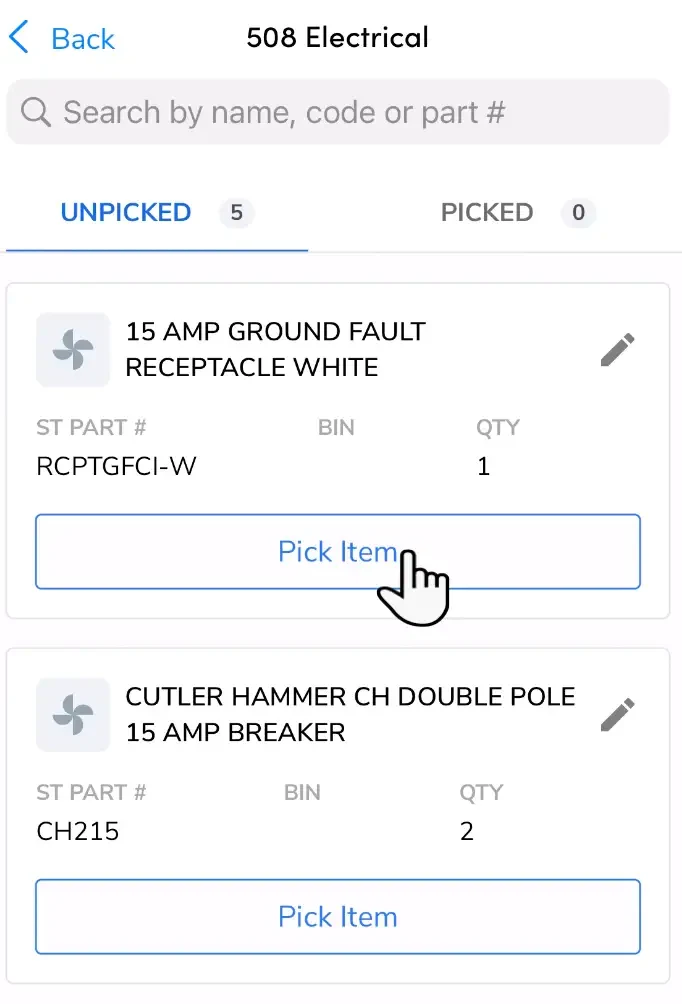
Back at the office, managers can then identify high-turnover items, reduce unnecessary purchases, and forecast future needs.
Modernize field inventory control
Tired of manual inventory counts? Paper-based tracking is always prone to errors, resulting in lost materials and wasted time, so it’s time to modernize your inventory control with digital tools like ServiceTitan.
Its Mobile Barcode Scanning feature takes your inventory to the next level as techs in the field can just scan parts directly from their phones or tablets to check items in and out of trucks or warehouses.


Each scan also updates inventory counts automatically, reducing human error and accelerating truck replenishment. And digital records make it easier to verify what’s on each truck without interrupting daily operations.
In a nutshell, this feature ensures the right parts are always available when needed, keeping jobs on schedule and minimizing downtime, allowing techs to spend more time servicing customers instead of managing paperwork.
Keep pricing agile
Supply chain disruptions have made it difficult for HVAC businesses to maintain consistent profit margins, especially since fluctuations in the cost of materials, equipment, and transportation can quickly turn what seems to be a profitable job into a loss.
This mostly happens because HVAC pros rely on outdated price lists, often resulting in underquoting projects or overcharging customers, both of which hurt your business performance.
To stay competitive, you need ServiceTitan’s Custom Pricebook. With this feature, you can automatically sync product and cost data from suppliers in your area to keep pricing accurate and up-to-date.


This ensures estimates, proposals, and invoices always reflect true costs, even as prices change due to supply chain issues. As a result, HVAC companies keep their operations profitable and adaptable in any market climate.
Strengthen supplier relationships
You need a tight relationship with your suppliers to maintain stability, especially with supply chains so unpredictable. Building trust with vendors ensures priority access to materials, better pricing and discounts, and faster issue resolutions.
A good idea is to diversify your supplier network to reduce dependency on any single source, while still maintaining long-term partnerships with reliable vendors.
Clear communication about upcoming projects, material needs, and delivery expectations helps suppliers plan more efficiently while protecting your business against shortages or delays.
ServiceTitan’s purchasing and inventory tools make this process easier by centralizing vendor data, tracking supplier performance, and streamlining order history in a single platform.
Communicate proactively with customers
Another key strategy for combatting supply chain issues is transparent communication with clients and helping them understand the reasons behind delays. Knowing what to expect makes it more likely that customers remain patient and loyal.
Engage in proactive communication, such as providing updates on part availability, estimated timelines, or alternative product options. It shows professionalism and care even during challenging circumstances.
With ServiceTitan’s reporting and communication features, it’s even easier to keep customers informed every step of the way. It has automated progress updates, notifications, and transparent job notes to help teams set clear expectations and minimize surprises.

With timely communication, contractors strengthen customer relationships and sustain satisfaction even when delivery of essential parts is beyond their control.
Over to You
Staying ahead of HVAC supply chain challenges in 2026 and beyond requires a mix of proactive strategies, preparation, and the right technology.
Contractors should embrace digital tools as they help improve visibility into their inventory, strengthen supplier relationships, and reduce disruptions that might keep their business from running smoothly.
ServiceTitan is a great tool for HVAC business owners who want to overcome the challenges of supply chain management. From inventory and purchasing orders to real-time communication and reporting, ServiceTitan helps streamline operations, control costs, and deliver exceptional customer service.


ServiceTitan HVAC Software
ServiceTitan is a comprehensive HVAC business software solution built specifically to help service companies streamline their operations, boost revenue, and achieve growth. Our award-winning, cloud-based platform is trusted by more than 100,000+ contractors across the country.


