


Knowing the right HVAC codes can make or break your job.
Before starting your next installation or service call, you can brush up on them to avoid costly mistakes, stay compliant, and deliver safe, high-quality work.
But what exactly are HVAC codes? Why are they so important?
That’s what this guide is all about. In it, you’ll learn:
The difference between codes and standards
Which organizations set them
The main types of codes
How often you need to update them
The common consequences of violating HVAC codes
Dive in and use this guide to boost compliance, reduce callbacks, and build a reputation for code-perfect workmanship.
What Are HVAC Codes and Standards?
HVAC codes and standards are the official rules that guide how heating, cooling, and ventilation systems are designed, installed, or maintained.
Their purpose? To ensure that every job is safe and efficient, without putting workers at risk. Usually, the codes are created by organizations such as the International Code Council (ICC) and are legally binding. Disregard them, and you risk fines, delays, and even legal action.
It’s also important to pay attention to groups like the American Society of Heating, Refrigerating, and Air-conditioning Engineers (ASHRAE) that guide technical best practices.
These organizations ensure contractors pass inspections with confidence, protect workers and clients alike, and reduce energy use.
What Is the Difference Between HVAC Codes and HVAC Standards?
HVAC codes are mandatory regulations that impose the minimum legal requirements for installing, maintaining, and repairing heating and cooling systems.
They’re adopted and enforced by the state, as well as local authorities, which means you must follow them to pass inspections, avoid penalties, and ensure public safety.
HVAC standards are guidelines created by industry organizations like ASHRAE, ACCA (Air Conditioning Contractors of America), or AHRI (Air-Conditioning, Heating, and Refrigeration Institute) and most are voluntary. However, they are often incorporated into local codes, making them mandatory.
Take a look at this graph to clearly see the differences:


Why Are HVAC Codes and Standards Important?
Contractors follow these HVAC codes and standards to deliver work that is safe, efficient, and compliant, so as to minimize risk and liability and protect people and property.
Here’s why following the codes is important:
Safety first: Proper installation and adherence to codes prevent fire hazards, electrical accidents, and carbon monoxide exposure.
Energy efficient: Efficient equipment and system design reduces energy consumption and utility costs for businesses and homeowners.
Indoor air quality: Following HVAC codes ensures proper ventilation, filtration, and airflow, keeping indoor air quality healthy.
Legal compliance: Helps you avoid fines, failed inspections, and potential lawsuits in case of non-compliance.
Professional credibility: HVAC companies that consistently follow codes build trust with clients and inspectors, enhancing their reputation.
Which Organizations Set HVAC Codes and Standards?
There are several organizations that develop, maintain, and enforce HVAC codes and standards. Knowing which organization to contact should you need to clarify these codes/standards helps you stay compliant with them and avoid getting in trouble later:
The ICC publishes the International Mechanical Code (IMC) and International Energy Conservation Code (IECC) which are widely used by local jurisdictions.
ASHRAE develops technical standards for ventilation and energy efficiency.
The National Fire Protection Association (NFPA) sets safety standards for fire prevention and electrical systems.
The Sheet Metal and Air Conditioning Contractors’ National Association (SMACNA) usually provides standards for duct construction, installation, and HVAC system fabrication.
The American Society of Mechanical Engineers publishes codes for pressure vessels, boilers, and piping systems used in HVAC.
What Are the Main Types of HVAC Codes?
There are multiple code categories, but each ensures that systems are built correctly and operate smoothly. Contractors need to understand these codes because they help them install and design systems that are safe and built to last.
Here are the major categories you should follow:


Building codes: Covers structural requirements, equipment, and overall safety for HVAC installations.
Mechanical codes: Typically based on the IMC, they govern heating, cooling, ventilation, and combustion systems.
Electrical codes: Follow the safety standards from the National Electrical Code and focus on wiring, disconnections, circuit sizing, etc.
Plumbing codes: Apply when HVAC systems connect to drains, condensate lines, or hydronic systems.
Energy codes: Based on the IECC or ASHRAE 90.1, they set the minimum efficiency standards for equipment, insulation, or ventilation.
Fire codes: Mandate fire safety around ductwork, fire dampers, smoke control, and combustion appliances.
What Are the Most Common HVAC Standards?
Below are the go-to standards and what each covers:


ASHRAE 90.1 or energy performance for buildings sets minimum energy-efficiency requirements for commercial buildings and acts as the baseline for many codes.
ASHRAE 62.1 or ventilation and indoor air quality defines ventilation rates, filtration, and design procedures for non-residential spaces.
IECC sets building-level efficiency rules.
AHRI performance standards and certification help equipment testing and performance specs manufacturers certify rating claims, such as SEER, capacity, etc.
SMACNA duct construction standards refer to industry guidance for building, sealing, and testing ductwork to last and perform.
How Do Residential HVAC Codes Differ From Commercial Codes?
Residential HVAC codes focus on smaller systems typically found in people’s homes. The ventilation systems are simple and have basic safety features.
Commercial codes, on the other hand, are more complex, covering larger equipment, advanced ventilation systems, and more detailed mechanical or electrical specifications.
Key residential HVAC codes and standards
Residential codes prioritize simplicity and safe operations. Keep in mind that exact requirements vary by state or municipality, but these are the most adopted:
International Residential Code (IRC): Covers HVAC equipment installation, combustion air, ventilation, and clearances, ideal for one– and two-family homes.
IMC: Sometimes used alongside the IRC, it sets rules for furnaces, heat pumps, boilers, and refrigerant handling.
IECC: Specifies minimum efficiency levels, blower door testing, and mechanical ventilation regulations for new homes.
ACCA Manual J: Required in most jurisdictions for residential load calculations to properly size equipment.
ACCA Manual S: Used for equipment selection—ensures the chosen system matches the manual J load.
ACCA Manual D: Focuses on ductwork design, sizing, and airflow distribution.
ASHRAE 62.2: Standard for ventilation and indoor air quality in low-rise residential buildings.
State and local amendments: Many regions modify ventilation rules and duct leakage limits based on climate and regional priorities.
Key commercial HVAC codes and standards
Commercial codes demand more complex and technical requirements than residential systems due to advanced ventilation needs and stricter safety regulations.
The following codes are most commonly applied:
IMC: Covers equipment installation, refrigerant safety, combustion air, and mechanical room requirements.
ASHRAE 90.1: Sets the minimum energy-efficiency standards for commercial buildings, including controls, duct insulation, and building envelope performance.
ASHRAE 62.1: Defines ventilation and indoor air quality for commercial spaces such as offices, hospitals, and schools.
Uniform Mechanical Code: An alternative to the IMC with its own mechanical and ventilation requirements, used in some states.
IECC: Establishes energy efficiency requirements and often references ASHRAE 90.1 as a compliance path.
NFPA codes: This mostly addresses fire protection for HVAC systems, including smoke control and duct construction.
State and local modifications: Based on local climate and safety priorities, some jurisdictions adjust ventilation rates, energy standards, and mechanical room requirements.
What Are Common Consequences of Violating HVAC Codes?
Ignoring, misunderstanding, or accidentally violating HVAC codes can lead to serious consequences for contractors. Any violation can become costly or dangerous.
Common outcomes include:
Failed inspections: Noncompliant installations halt projects, delay occupancy, and require expensive rework.
Fines and penalties: Local authorities may issue fines for code violations, especially if it happens often.
Safety hazards: Improper installation of HVAC systems can cause fires, carbon monoxide leaks, or equipment failure, which puts clients’ lives at risk.
Higher liability exposure: Contractors can face legal claims if unsafe work leads to injury, property damage, or system failure.
Warranty voids: If you install systems against code, manufacturers may refuse warranty coverage for equipment.
Project delays: Code corrections can slow down time and damage client relationships.
How Often Are HVAC Codes and Standards Updated?
Most HVAC codes and standards are updated on a three-year cycle, which includes the IRC, IMC, and many ASHRAE standards like 62.1 and 90.1.
These updates happen to reflect new technology, improved safety practices, changes in energy efficiency requirements, and evolving indoor air quality research.
Moreover, some states adopt standards every new cycle, while others might create their own amendments.
One good way to stay up-to-date with current rules and regulations is to follow state and local building departments on social media, attend industry training, and subscribe to updates from ICC and ASHRAE.
Staying updated also means using software tools that reflect the latest code requirements.
What Are the Best Practices For Staying Compliant With HVAC Codes and Standards?
Staying compliant with HVAC codes and standards is more than just passing inspections and constantly hoping for the best. You need to protect your customers’ safety and ensure systems perform well every single time.
1. Verify local code requirements
Compliance always starts with knowing the exact guidelines in your city, county, and state. Every jurisdiction might adopt different versions of energy, mechanical, and building codes, so you must follow the right one.
Check local changes, inspection timelines, and permit requirements for the city you’re operating in to ensure every installation is safe, compliant, and inspection-ready.
2. Standardize documentation workflows
To stay compliant, create consistent documentation through installation checklists, inspection-ready HVAC forms, and repeatable job procedures.
Aside from helping avoid code violations, documentation helps eliminate errors and ensures every system meets code requirements. Since every tech can easily follow the same steps, it also reduces the risk of missing anything critical.
As a result, compliance becomes predictable instead of guesswork.
Digital forms are one of ServiceTitan’s specialties. It helps enforce gated flows by requiring technicians to complete specific steps before they close out a job.


This means they have to document code-related tasks like taking photos or videos and confirming safety checks before marking the job as finished. As a result, you’ll go through fewer inspection failures and a smoother handoff from field to office.
3. Track equipment and job history
Why is keeping detailed records of every system, such as model, age, repair, and installation, so important? Because it helps HVAC contractors reduce errors, stay compliant, and streamline inspections.
Think about it: when inspectors ask for proof of previous work, proper documentation makes it easier to show that load calculations were performed, clearances were checked, and refrigerants were handled correctly.
With ServiceTitan’s equipment and job history feature, technicians can get complete visibility into past repairs, notes, and photos, which helps them troubleshoot faster and avoid repeating past mistakes.

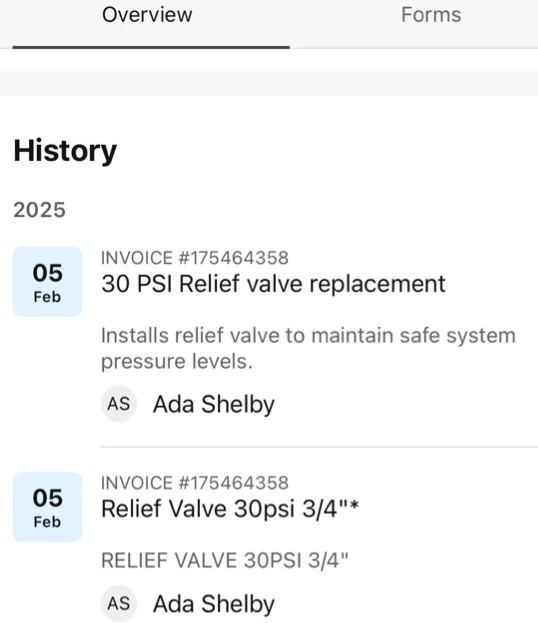
This ensures everyone knows what’s already been done, what code requirements were previously addressed, and what still needs attention. It helps HVAC teams deliver consistent, compliant, and high-quality work every time.
4. Maintain accurate on-site reporting
Accurate and timely reporting is great for showing that you’re compliant with local codes. Often, it means recording test results, equipment details, or taking potential corrective actions that inspectors can verify.
But it’s also useful for identifying recurring problems and supporting accountability among your team members.
ServiceTitan once again helps contractors do this automatically and not waste time manually compiling reports.
With its Invoice Summary Generator, you can automatically gather job notes, completed forms, and field data into organized summaries.


With this feature, contractors can easily provide customers or inspectors with the data they need to ensure compliance and transparency and reduce disputes. As a result, every job is audit-ready without extra administrative work.
5. Train technicians continuously
If you want to stay compliant, ongoing education is a must. Techs must stay updated with new codes, evolving standards, manufacturer guidelines, and safety procedures to avoid gaps that could lead to violations.
In addition, regular training also ensures every tech understands the latest best practices, can handle refrigerants safely, follow inspection protocols, and correctly install equipment.
Continuous training builds confidence in the field, reduces errors, and helps contractors maintain a positive reputation for compliant work.
You must make sure to include refresher courses, hands-on workshops, and digital training modules if you want to stay current with the demanding HVAC landscape.
6. Use quality control audits
Maintaining code compliance means reviewing completed jobs, checking installations, and verifying that documentation is in order. Doing this helps you spot potential risks before inspectors do.
What about audits?
Audits reinforce best practices, highlight areas where techs might need additional training, and ensure every service call meets local and industry standards.
Regular quality control also promotes accountability across the team, reduces costly rework, and strengthens client trust. When integrated into your regular operations, audits become a proactive tool to catch errors and continuously improve operational efficiency.
Over to You
There’s a reason why staying up-to-date with HVAC codes and standards is so crucial: it’s to ensure the safety, efficiency, and compliance of your work.
You need to verify local rules, standardize documentation, track job history, maintain accurate reporting, and train technicians to ensure every job meets regulatory requirements.
Doing so also boosts client trust and operational efficiency, and helps you maintain a positive brand image.
ServiceTitan is a leading home service software solution that helps HVAC companies streamline operations, enforce compliance, and generate professional audit-ready reports.


Frequently Asked Questions (FAQs)
Just in case this guide hasn’t answered all your questions...
What is the $5,000 rule for HVAC?
The $5,000 rule is a simple guideline that contractors and homeowners use to decide whether to repair or replace an HVAC system.
It works like this: you multiply the repair cost by the age of the unit.
If the number exceeds $5,000, replacement is typically a more cost-effective choice. For example, a $600 repair on a 10-year-old system equals $6,000, meaning it’s time for a new unit.
It’s not an official code or standard, but a rule of thumb that helps you make smarter decisions that benefit the client.
What is the 20-year rule for HVAC?
If your HVAC system is 20 years old or more, replacement usually works out cheaper than continued repairs. Systems that get to this age typically face declining efficiency, higher energy bills, and use outdated technology, which might result in frequent breakdowns.
Once again, this is not an official regulation, but it helps contractors and clients make practical decisions about long-term comfort.
What are the code requirements for HVAC system design?
When designing an HVAC system, you must follow local mechanical codes, building codes, and any state-specific energy regulations.
These include requirements for proper:
Ventilation rates
Equipment sizing
Duct construction
Refrigerant handling
Combustion air
Clearances
Electrical safety
Designers must also ensure compliance with guidelines for load calculations, airflow, and indoor air quality.
What are the licensing requirements for HVAC professionals?
To operate legally, HVAC professionals must hold a state or local license to install, maintain, or repair air conditioning systems.
While requirements vary by state, they generally include:
Education or training, such as technical school programs or apprenticeships.
Examination, which means passing a written or practical test covering codes, safety, and system design.
Continuing education by attending periodic courses to stay current with updates.
Special endorsements, including certifications for handling refrigerants (EPA Section 608).
How do HVAC codes apply to system replacement or upgrades?
When replacing or upgrading an HVAC system, current codes and standards must be followed, even if the existing system was installed under older rules.
This includes:
Equipment sizing
Energy efficiency
Ventilation and ductwork
Safety requirements
Adhering to these codes ensures the new system is safe, efficient, and compliant, and will pass inspection.
ServiceTitan HVAC Software
ServiceTitan is a comprehensive HVAC business software solution built specifically to help service companies streamline their operations, boost revenue, and achieve growth. Our award-winning, cloud-based platform is trusted by more than 100,000+ contractors across the country.


