

Templates Guides
Commercial Roofer Job Description + Free Template [2026]
 Roofing
January 25th, 2026
ServiceTitan

![Commercial Roofer Job Description + Free Template [2026]](https://images.ctfassets.net/3q1a0w8cwuwf/5sGzYTRXv3DfMX5mlSogeH/385f97551835f688f1c72b7e3f9252e5/Commercial_Roofer_Job_Description___Free_Template.png?w=1920&h=1080&q=85&fm=webp&bg=transparent)
A clear job description increases your chances of attracting qualified candidates for your commercial roofer job position, but writing one isn’t always easy.
That’s why we’ve designed this resource to help roofing contractors craft clear, effective job descriptions that attract top talent.
Not only does it set realistic expectations right from the start, but it also helps filter out unqualified applicants, saving you time and effort.
Plus, to make things easier, we’ve included a free, ready-to-use commercial roofer job description template you can customize for your needs.
Commercial Roofer Job Description Template
Need a helping hand with your commercial roofer job description? Here is a template you can download and customize according to your needs.
Key Responsibilities:
Install, repair, and replace commercial roofing systems, including PVC, metal roofs, etc.
Measure, cut, and fit roofing materials according to project specifications or blueprints.
Apply waterproofing materials, sealants, and protective coatings.
Identify and repair roof leaks, damaged insulation, or structural issues.
Ensure proper sealing and insulation.
Follow OSHA safety protocols and wear required PPE at all times.
Perform routine inspections and preventative maintenance.
Collaborate with crew members and supervisors to complete jobs.
Required Qualifications
High school diploma or equivalent.
1+ year of experience in commercial roofing or general construction.
Ability to read and follow blueprints and work orders.
Valid driver’s license.
Preferred Certifications
OSHA 10 or 30 certification.
Manufacturer-specific training (e.g., Carlisle, GAF, Firestone).
Fall protection and scaffolding training.
First aid/CPR certification.
Skills and Competencies
Strong attention to detail and craftsmanship.
Physical stamina and balance.
Communication and teamwork skills.
Basic math and measurement skills.
Time management and the ability to meet project deadlines.
Physical Requirements
Ability to lift 50+ lbs. regularly.
Comfortable working at heights on roofs, ladders, or scaffolding.
Capable of bending, standing, climbing, and kneeling for extended periods.
Willingness to work outdoors in varying temperatures and weather conditions.
All you have to do is copy and paste this document and adjust it according to your needs.
Now, follow us as we go through each section, starting with what commercial roofers actually do.
The #1 newsletter for the trades.
What Does a Commercial Roofer Do?
A commercial roofer is a person specializing in installing, repairing, and replacing roofs on commercial buildings like warehouses, office buildings, schools, or retail centers. They ensure buildings are weatherproof, compliant with safety regulations, and energy efficient.
Mostly, commercial roofers:
Work with materials like TPO (thermoplastic olefin), EPDM (ethylene propylene diene monomer), PVC (polyvinyl chloride), etc.
Read blueprints and follow technical specifications.
Ensure proper sealing, flashing, and insulation to prevent water intrusion.
Use tools such as torches, welders, rollers, or safety harnesses to finish tasks.
Collaborate with crew members, site managers, or roofer helpers on large projects.
Perform inspections and identify damage.
We’ll discuss these responsibilities in more detail next.
What Are the Primary Responsibilities of a Commercial Roofer?
Usually, a commercial roofer’s primary responsibilities are:
Measuring and cutting roofing materials to specifications: Accurately size and shape membranes, insulation, and metal panels to fit design plans.
Installing commercial roofing systems and membranes: Apply different roofing systems like TPO, PVC, or metal, following manufacturer specifications and safety codes.
Applying waterproofing materials and coatings: Use sealants and protective coatings to prevent leaks and extend roof lifespan.
Identifying and repairing leaks or structural damage: Troubleshoot problem areas, replace damaged materials, and reinforce weak areas.
Inspecting roof systems for wear, damage, or safety hazards: Conduct routine inspections to ensure long-term performance.
In short, commercial roofers perform a very important role in making sure the roofing system is installed correctly, properly maintained, and lasts long-term.
Next up, we talk about what qualifications to look for in an ideal candidate.
What Qualifications Are Required to Become a Commercial Roofer?
For commercial roofers, formal education isn’t mandatory. Many states don’t provide state-issued roofing licenses, but requirements vary widely from state to state.
For example, California requires any person who performs roofing work over $500 to obtain a class C-39 Roofing Contractor license, while Iowa doesn’t offer a roofing license but requires contractors who earn over $2,000 a year to register with the Iowa Division of Labor.
Read this article to see the qualifications for your state.
In general, these are the most common qualifications employers look for in candidates:
High school diploma or equivalent: Most employers prefer candidates with a basic educational foundation, especially when it comes to reading blueprints, taking measurements, and understanding roofing terms.
Prior roofing or construction experience: The ideal candidate needs to have practical experience in roofing or general construction, preferably one or two years.
On-the-job training or apprenticeship background: Many roofers learn the trade through apprenticeship or informal on-the-job training programs under the supervision of experienced professionals.
Familiarity with commercial building practices and materials: Commercial roofing differs from residential roofing, so understanding the different materials is necessary.
Let’s talk next about the certifications that are commonly required.
What Certifications Are Commonly Required for Commercial Roofers?
Certifications are vital for demonstrating a potential candidate’s knowledge of safety protocols, roofing systems, and best practices.
For instance, the Kansas Roofing Registration Act requires roofers to obtain a Roofing Contractor Registration certificate from the Kansas attorney general to provide roofing services for a fee.
Rhode Island requires you to obtain a certificate of workers’ compensation insurance to qualify for licensure.
Not all of the following certifications are mandatory, but they can enhance a commercial roofer’s job prospects:
OSHA 10/30-hour safety training: This teaches workers how to recognize and prevent workplace hazards. While OSHA 10 is geared toward entry-level, OSHA 30 is intended to deepen knowledge.
Fall-protection certification: Commercial roofers work at great heights, so they must know how to properly use a harness, anchors, and lifelines to prevent falls, a leading cause of injury in the roofing industry.
Manufacturer-specific installation training: These courses certify roofers to install specific roofing systems correctly and may be required for warranty coverage.
First aid/CPR certification: Some employers prefer their workers to have these certifications to ensure a quick response to potential on-site injuries or medical emergencies.
Scaffold and ladder safety certification: Provides training on the safe setup and use of scaffolding and ladders in compliance with OSHA standards.
Next, we examine the technical and soft skills required for a commercial roofer.
What Skills Are Essential for a Commercial Roofer?
To perform effectively on commercial roofing projects, roofers must possess strong technical and soft skills that ensure safe, precise, and quality work, as well as increased customer satisfaction.
Technical skills
These are the technical skills the perfect candidate should possess:
Proficiency with roofing tools and materials: Commercial roofers should know how to safely operate tools such as torches, heat welders, roofing knives, and drills, and be familiar with materials like TPO, PVC, etc.
Ability to read blueprints and technical documents: They should look at construction plans and manufacturer specifications and understand what they’re reading, without being confused.
Knowledge of commercial roofing systems and repair methods: Roofers must be skilled in installing and maintaining various systems and know how to identify and fix issues like leaks and punctures.
According to the Better Business Bureau, 40 percent of customer complaints are related to roofing leaks caused by poor installation or material wear, so your workers must pay close attention to this. Check out more statistics here.
Understanding of safety and weatherproofing techniques: Applying flashing, sealants, and insulation properly is vital for preventing water intrusion and improving energy efficiency.
Soft skills
In addition to technical expertise, commercial roofers need strong soft skills to work efficiently with teams and adapt to various work environments.
These are the traits your candidate needs:
Teamwork and coordination: Candidates must work in crews, which require clear communication and cooperation, as well as a shared understanding of project goals to ensure productivity.
Problem-solving and decision-making: Unexpected challenges like weather delays happen, so candidates must think quickly on their feet to find practical solutions that keep the project on track.
Attention to detail: Proper installation of roofing components requires precision, as even the smallest of errors can lead to costly leaks or failures.
Time management: In the commercial construction industry, staying on schedule and completing projects on time is critical. Employees must show up on time, meet deadlines, and be relied on to follow through with projects.
What Are the Physical Demands of a Commercial Roofer Job?
It’s important to set realistic expectations for the job right from the start. The commercial roofing business is a physically demanding trade that requires strength, endurance, and the ability to work at great heights, so roofers must be comfortable with performing these strenuous tasks.
As Derrek Hofrichter—a business coach at Service Business Evolution—said in a webinar with ServiceTitan, one of the reasons employees quit is unclear expectations.
So make these physical demands of the job very clear:
Repetitive lifting of heavy materials: Candidates must carry rolls of membrane, tools, and insulation boards throughout the day (over 50 lbs.).
Climbing ladders and/or scaffolds and working on sloped or flat roofs: Candidates must use fall protection equipment at all times and have a great sense of balance and mobility as they traverse rooftops.
Exposure to long hours of sun, heat, cold, or rain: Commercial roofing is year-round work, so workers must often toil in extreme temperatures or inclement weather.
Frequent kneeling, crouching, bending, and standing: Installing roofing systems involves sustained physical postures that can be hard on the knees, back, and joints.
Using safety gear and harnesses in high areas: Roofers must wear PPE equipment like hard hats, harnesses, and non-slip boots to reduce the risk of falling.
On the flip side of the hiring process, if you’re a roofer looking to apply for a job, here are tips for creating a perfect resume. Hirers, meanwhile, should check out these interview questions to filter potential candidates.
Now that we’ve discussed everything a good job description should include, let’s talk about how a field service app like ServiceTitan helps commercial roofers succeed.
How a Field Service App Empowers Commercial Roofers
Modern tools like ServiceTitan’s Field Service App transform the commercial roofing industry by making daily operations more efficient and less stressful for field crews.
Here’s how ServiceTitan works:
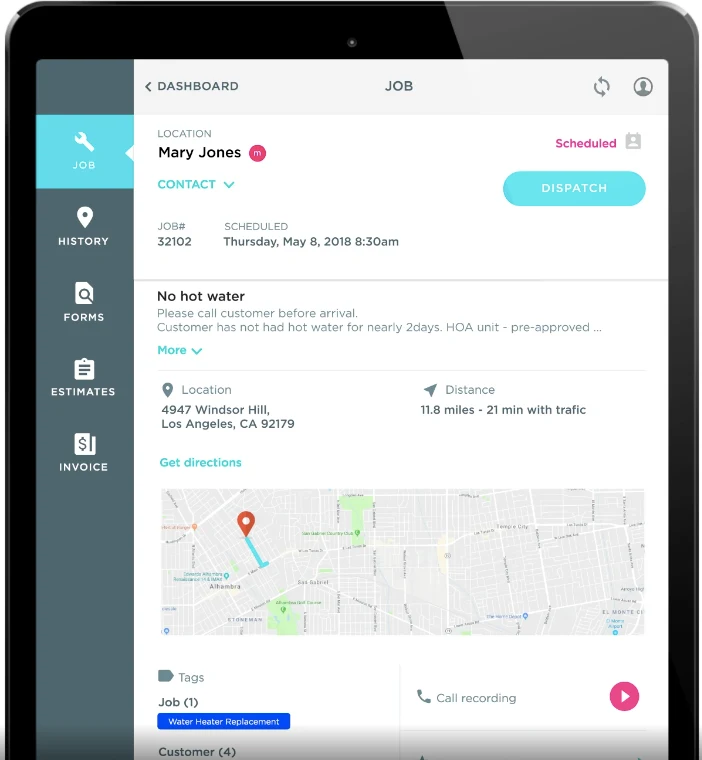
Simplifies scheduling, navigation, invoicing, and communication by allowing roofers to see job assignments in real time, with clear instructions and updates. It allows techs to arrive fully informed, as the app contains everything about their clients, such as names, contact info, and notes.

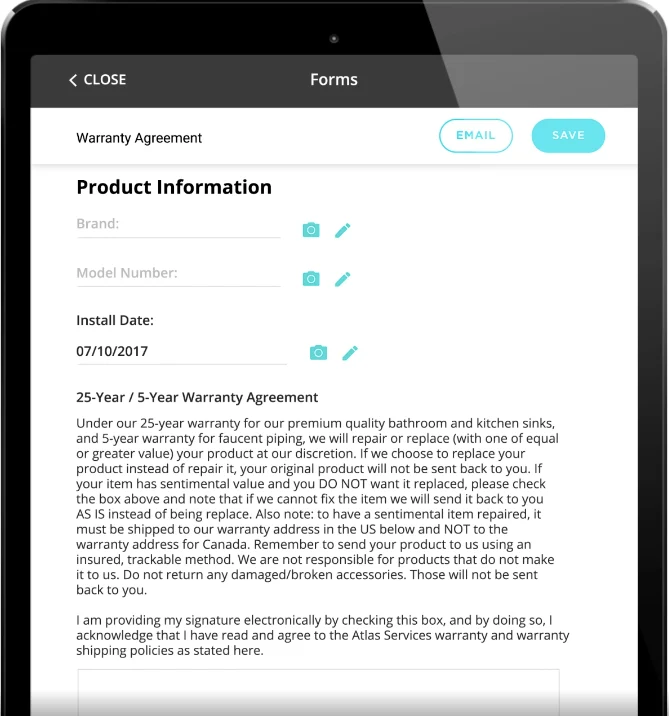
In-app invoicing and communication, which means roofers can upload photos, generate invoices, and capture signatures on the spot, eliminating paperwork and speeding up billing.

Attracts modern talent, as companies that use tools like ServiceTitan’s Field Service App come across to candidates as tech-savvy. They appeal to newer generations of skilled roofers who value efficiency, transparency, and digital convenience on the job.
Over to You!
Writing a commercial roofer job description shouldn’t be a headache. With our templates (which you can adjust according to your needs), crafting clear, effective job descriptions that attract top talent has never been easier.
Not only do you set realistic expectations right from the start, but you also save time and effort.
ServiceTitan’s Field Service App is a modern tool that helps commercial roofing businesses make their operations more efficient with less paperwork and simplified scheduling, navigation, invoicing, and communication.
Frequently Asked Questions (FAQs)
Let’s answer some of your most arduous questions.
What tools and equipment does a commercial roofer use?
Commercial roofers use a wide variety of tools and equipment, the most common being:
Roofing knives and utility blades for cutting roofing materials like shingles.
Roofing hammers and hatchets for nailing.
Cordless drills and screw guns for securing fasteners.
Welders and heat guns for installing thermoplastic roofing membranes.
Roof rollers to ensure proper adhesion.
Safety harnesses and fall protection systems.
Scaffolding, ladders, and lifts to access elevated work areas.
What types of systems does a commercial roofer typically work with?
Commercial roofers typically work with:
TPO (thermoplastic olefin)
EPDM (ethylene propylene diene monomer)
PVC (polyvinyl chloride)
Built-up roofing
Modified bitumen
Metal roofing
What is the average salary for a commercial roofer?
According to Indeed, the average salary for a commercial roofer is around $25.11 per hour, or $58,480 per year. But they can earn as much as $87,161 per year (these numbers can fluctuate).
What is the typical career path for a commercial roofer?
Here’s the typical career path for a commercial roofer:
Laborer or roofing helper
Apprentice roofer
Journeyman roofer
Foreman or crew leader
Project manager
Business owner or roofing contractor


