

Templates Guides
Roofer Helper Job Description + Free Template [2026]
 Roofing
January 25th, 2026
ServiceTitan

![Roofer Helper Job Description + Free Template [2026]](https://images.ctfassets.net/3q1a0w8cwuwf/3KTK2hDTvfq6Wt7TLsYPM0/24220249d3ba51815b334112d84895a6/Roofer_Helper_Job_Description___Free_Template.png?w=1920&h=1080&q=85&fm=webp&bg=transparent)
A clear job description for a roofer helper not only outlines expectations but also helps streamline the hiring process by attracting individuals with the right skills, experience, and mindset for the role.
If you don’t know where to start, don’t worry. This article will help you create clear and compelling job descriptions that attract qualified candidates.
To make things even easier, we’ve also included a free template you can customize to fit your needs—and use it right away!
Roofer Helper Job Description Template
If you’re seeking a reliable and hardworking roofer helper to join your roofing team, you need a convincing job description.
Use this template to guide your next job posting.
Key Responsibilities:
Assist roofers with installing, repairing, and replacing roofing systems.
Load and unload roofing materials and tools at job sites.
Prepare and clean work areas (e.g., removing debris).
Operate hand and power tools under supervision.
Follow safety guidelines and use fall protection equipment correctly.
Set up ladders and scaffolding.
Place and secure roof tiles.
Required Qualifications
High school diploma or GED.
Basic knowledge of construction.
Ability to follow verbal instructions and safety protocols.
Preferred Certifications
OSHA 10 or 30 Hour Construction Safety Certification.
Fall protection training.
First aid and CPR certification.
Scaffolding and ladder safety certification.
Skills and Competencies
Strong work ethic and punctuality.
Ability to work well in a team environment.
Good manual dexterity and hand-eye coordination.
Basic math and measurement skills.
Problem-solving attitude and willingness to learn.
Physical Requirements
Ability to lift and carry up to 75 lbs regularly.
Comfortable working at heights.
Capable of bending, kneeling, and standing for long periods.
Tolerance for outdoor work in heat, cold, and other weather conditions.
Physical stamina to handle long hours and physically demanding tasks.
Moving forward, let’s talk about a roofer helper’s primary responsibilities.
The #1 newsletter for the trades.
What Does a Roofer Helper Do?
A roofer helper assists roofers with the installation, repair, and maintenance of various roofing systems, including metal, slate, and green roofing.
Generally, they prepare the materials and tools before work begins, load and unload supplies safely, and help maintain a clean job site by removing debris. Roofer helpers should follow instructions closely to ensure projects run smoothly and efficiently.
While roofer helpers comprise only five percent of the roofing workforce, they’re still a valuable asset to any roofing company.
Let’s look more closely at their responsibilities in the next section.
What Are the Primary Responsibilities of a Roofer Helper?
A roofer helper’s main job is to handle the essential prep work and assist skilled roofers throughout the project.
Here’s what their day-to-day schedule looks like:
Carrying roofing materials to and from work areas, such as transporting shingles, tiles, tools, and other materials needed to keep the job running smoothly.
Operating or assisting with basic roofing tools and equipment, which means handling tools like nail guns and cutters under supervision.
Setting up ladders, scaffolding, and safety gear, and ensuring they’re positioned correctly before work begins.
Removing old roofing.
Maintaining a clean and hazard-free job site by clearing the work area of obstacles, nails, and waste to support a clean environment.
Inspecting equipment structures to ensure they work correctly and are safe to use.
Next, let’s discuss the qualifications an ideal roofer helper should have.
What Qualifications Are Required to Become a Roofer Helper?
Roofer helper positions are usually entry-level, so they don’t require as many qualifications as a skilled roofer. While most training is on-site, a basic foundation in construction practices is needed.
Here are some nice-to-have qualifications candidates should have in their resumes:
High school diploma or GED: Often preferred by companies, but employers do not always require it.
Basic understanding of construction: The ideal candidate should be able to safely handle tools such as hammers, tape measures, and ladders, and understand basic roofing terminology.
Ability to follow written or verbal instructions: Clear communication and attention to detail are necessary for safety and productivity.
Willingness to work outdoors in various conditions: A roofer helper job isn’t all sunshine and rainbows. They must be comfortable working in heat, cold, rain, and at heights.
Let’s talk about certifications next.
What Certifications Are Commonly Required for Roofer Helpers?
Roofer helper positions don’t necessarily require formal certifications, but specific safety and training credentials can significantly improve an applicant’s chances, such as:
OSHA 10/30-Hour Safety Training: These programs educate workers on workplace safety and health hazards, including hazard recognition and the use of personal protective equipment (PPE). OSHA 10 is for entry-level workers, while the 30-hour course is for workers who want to go more in-depth.
Fall protection certification: Roofer helpers must work at heights, so they must undergo training and learn how to properly use harnesses, lifelines, and other fall arrest systems to prevent injuries.
First aid and CPR certification: Teaches basic emergency response techniques for handling minor injuries or stabilizing workers until medical help arrives.
Scaffold user certification: This teaches roofer helpers to safely set up, use, and dismantle scaffolding in accordance with OSHA standards.
What about the essential skills a roofer helper should have? Let’s see.
What Skills Are Essential for a Roofer Helper?
Roofer helpers need a mix of technical and soft skills to succeed in this role.
Technical skills
To support roofing crews safely and help them complete projects, roofer helpers need the following technical skills:
Basic tool handling: Candidates should safely and effectively use standard roofing tools like hammers, utility knives, and nail guns.
Understanding of safety practices: Candidates should know proper PPE use, ladder safety, and fall protection techniques to minimize job-site injuries.
Ability to measure and cut materials accurately: Candidates need basic math skills to take precise measurements and cut shingles or underlayment. This ensures proper installation of roofing systems and reduces waste.
Soft skills
Aside from their technical skills, roofer helpers should also have strong soft skills, such as adapting to dynamic environments and contributing positively to the crew.
Soft skills might include:
Strong work ethic and reliability: Candidates should arrive on time, stay focused during the job to avoid accidents, and consistently complete tasks. This keeps projects on track and builds trust in the brand.
Ability to follow directions closely: Candidates should closely follow instructions from experienced roofers to ensure quality workmanship.
Teamwork and communication: Candidates should work well with others and communicate clearly for an efficient job site environment.
Willingness to learn and adapt: Candidates should be open to new techniques, tools, and responsibilities to support their long-term growth in the roofing trade.
Moving forward, let’s talk about the physical demands of the job.
What Are the Physical Demands of a Roofer Helper Job?
The roofer helper position is physically demanding, requiring consistent effort and the ability to work in harsh conditions. Setting clear expectations helps candidates prepare for the realities of the job and reduces turnover.
Here’s what’s required:
Frequent lifting of materials: Roofer helpers must regularly lift and carry heavy bundles of shingles, tools, and debris up the ladder.
Standing, bending, and kneeling for long periods: They must prep surfaces, install materials, and assist roofers, so candidates must be flexible and able to work in any position for extended periods.
Working at heights: Candidates need to be comfortable with working at heights, as much of the work is done on sloped or elevated roof surfaces.
Exposure to extreme weather: Roofer helpers must be able to work effectively in outdoor conditions, regardless of weather and season.
Using protective gear in dusty or noisy environments: Candidates must use hard hats, gloves, ear protection, and masks in certain situations, such as during demolition.
According to statistics, 73 percent of companies are currently hiring. Want to make sure you hire the right people, every time? Here are some roofer interview questions you can ask potential candidates to ensure you hire only the best talent.
How a Field Service App Empowers Roofer Helpers
Many modern roofing companies are turning to ServiceTitan’s platform to streamline operations and support field crews.
This solution is designed to:
Simplify scheduling: With ServiceTitan, roofing businesses can confidently plan for today, tomorrow, and beyond. See your schedule weeks or even months in advance to ensure your employees are available at the right time.


Generate more efficiency, less paperwork: Workers tend to forget or lose vital paperwork, delaying jobs and annoying customers. With ServiceTitan, you can upload your forms to the app and trigger them automatically at different stages of the job.

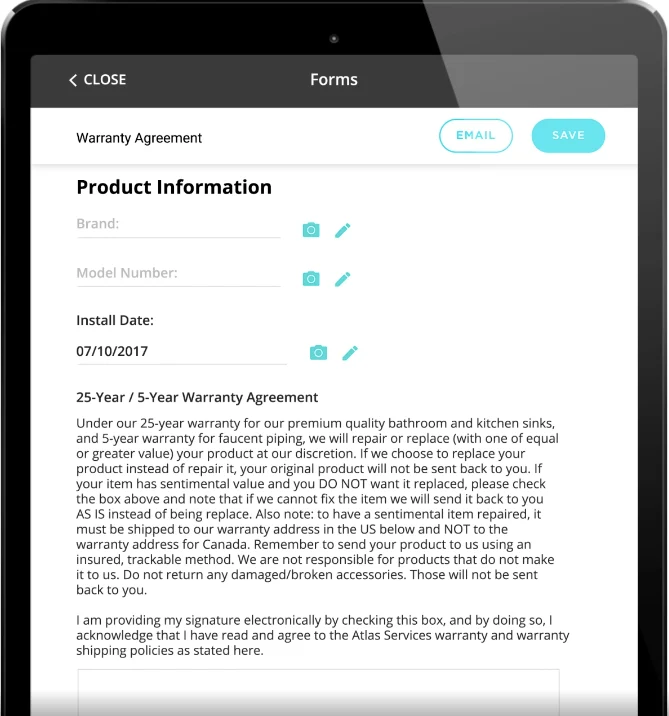
Streamline navigation, invoicing, and communication: ServiceTitan helps roofing helpers focus on their work by reducing manual tasks and improving job clarity. As a result, roofer helpers will experience greater efficiency, transparency, and job satisfaction.
But the biggest benefit of using ServiceTitan’s Field Service App?
It helps attract top talent because people like to see a tech-savvy company. It also delivers a modern experience designed to increase customer satisfaction.
Over to You!
Hiring the right roofer helper starts with a clear job description. It’s vital to outline key responsibilities, unveil the physical demands of the job, and list the necessary qualifications and certifications to ensure you get the best, hardworking candidates.
Use the free template we’ve provided to streamline your hiring process and set clear expectations from day one.
ServiceTitan is a leading software solution for both commercial and home service businesses, including roofing companies. With the Field Service App, roofing companies can prove they're tech-savvy and attract only the top candidates.


Frequently Asked Questions (FAQs)
This section aims to answer some of the most common questions people have about roofer helpers.
What tools and equipment does a roofer helper use?
Here’s a list of the equipment and tools a roofer helper generally uses:
Hand tools: Hammer, utility knife, tape measure, chalk line, etc.
Power tools: Nail gun, power drill, circular saw.
Safety equipment: Hard hat, work gloves, roof anchors, roofing boots, etc.
Ladders and scaffolding
Miscellaneous: Wheelbarrow, roofing torch, buckets, roofing calculators.
What types of systems does a roofer helper typically work with?
Here are the most common types:
Asphalt shingle roofing
Metal roofing
Flat roofing systems
Tile roofing
Wood shake or shingle roofing
What is the average salary for a roofer helper?
The average salary for a roofer helper is $41,600 per year, with salaries ranging from $33,400 to $57,000. Hourly wages can range from $10.40 to $17.80.
The average salary also varies by region. For example, Alaska has the highest median income at around $42,660.
What is the typical career path for a roofer helper?
Here’s how it usually unfolds:
Roofer helper: Assists roofers by carrying materials, etc.
Apprentice roofer: Works under the supervision of experienced roofers.
Journeyman roofer: Independently installs, repairs, and maintains roofs.
Roofing crew leader: Supervises teams and ensures quality and safety.
Roofing contractor: Owns and manages a roofing business.
