

Templates Guides
Lead Plumber Job Description + Free Template [2026]
 Plumbing
January 25th, 2026
ServiceTitan

![Lead Plumber Job Description + Free Template [2026]](https://images.ctfassets.net/3q1a0w8cwuwf/6Ti0EMbfq4prHetvmgIs4J/f4e1587026636fd2ced41a21beda62cb/Lead_Plumber_Job_Description___Free_Template.png?w=1920&h=1080&q=85&fm=webp&bg=transparent)
Hiring a great lead plumber isn’t just about finding someone who knows their way around pipes and pressure gauges. You need an employee who can run jobs, manage people, and keep things moving along with minimal hand-holding.
However, many job descriptions don’t attract the type of lead plumber you would actually want on your team. When a job description isn’t compelling, the best candidates just scroll past and never look back.
This guide provides a complete, customizable lead plumber job description template. We also include some real-world tips to help you hire with more confidence.
Lead Plumber Job Description Template
Use this template to guide your next job posting. We built it to help you attract qualified candidates who can do more than just fix a leaky toilet.
A lead plumber can manage a team, communicate with customers, and keep your projects on point.
Job Summary
The lead plumber is responsible for overseeing plumbing installations, maintenance, and repairs on residential and commercial job sites. This role combines hands-on plumbing work with leadership qualities, including supervising crews, coordinating with project managers, and ensuring that all work meets applicable codes and safety standards.
Key Responsibilities:
Supervise plumbing teams on residential and/or commercial job sites.
Diagnose, install, repair, and maintain plumbing systems, fixtures, and pipelines.
Interpret blueprints and building codes to determine optimal plumbing layouts.
Coordinate with dispatchers and project managers to meet job timelines.
Ensure all work complies with local, state, and federal plumbing regulations.
Communicate clearly with customers about job scope, pricing, and progress.
Maintain accurate records with customers regarding job scope, pricing, and progress.
Provide mentorship and training to junior plumbers and apprentices.
Participate in weekly meetings and contribute to job planning and improvements.
Promote safety best practices and uphold job site cleanliness and professionalism.
Required Qualifications
High school diploma or GED equivalent.
Valid journeyman plumbing license (or equivalent state-required credential).
Minimum of five years of hands-on practical plumbing experience.
Valid driver’s license with an acceptable driving record.
Ability to read and interpret blueprints, schematics, and job specifications.
Familiarity with plumbing codes and safety procedures.
Comfortable using digital tools required for job tracking, invoicing, and communication.
Preferred Certifications
OSHA 30-Hour Construction Safety Certification
Backflow Prevention Certification
Medical Gas Installer Certification
EPA Section 608 Certification (if relevant)
Certified Plumbing Design Technician (CPDT)
EPA Lead-Safe Certification
Master Plumber (if supervising journeymen plumbers)
Green Plumber Certification
Skills and Competencies
Strong problem-solving and diagnostic skills.
Effective time management and organizational habits.
Ability to lead a crew and manage workflow under pressure.
Basic proficiency in tools like Microsoft Excel, Word, or mobile service apps.
Comfortable with digital scheduling, invoicing, and customer record platforms.
High attention to detail and commitment to delivering quality work.
Physical Requirements
Ability to lift and carry tools, equipment, and materials weighing up to 50 pounds.
Comfortable working in a variety of physical positions, including standing, walking, climbing, bending, kneeling, and crouching.
Capable of using hand and power tools safely and effectively.
Visual and auditory ability to identify mechanical issues and communicate with team members and customers.
Willingness to work outdoors and indoors in a range of weather conditions.
These tasks may be performed with or without reasonable accommodation.
Now that you have the template, let’s break it down. What does a lead plumber actually do on a daily basis, and what should you expect from someone in this role?
The #1 newsletter for the trades.
What Does a Lead Plumber Do?
A lead plumber wears more hats than just the one with a headlamp. Yes, they’re operating the tools, but they’re also running the job site. They coordinate with project managers, guide junior team members, and ensure that every installation or repair is up to code.
Lead plumbers are the people you count on to keep crews moving, paperwork tidy, and clients well-informed of progress.
Their leadership helps maintain safety, meet deadlines, and protect the profitability of your plumbing business. This is especially true if you’ve got multiple teams or jobs on the go at once.
Let’s break those duties down further so you know exactly what you’re looking for in your next hire.
What Are the Primary Responsibilities of a Lead Plumber?
Being an excellent plumber is only half the job. The other half involves thinking ahead, guiding the team, and making sure every job wraps up cleanly, safely, and on time.
Lead plumbers are the on-site go-to, handling everything from technical tasks to people management. Their responsibilities include:
Team supervision: Assign daily tasks, coach junior plumbers, and troubleshoot any issues that arise during a job. A good lead plumber knows when to jump in and when to let others learn.
Client communication: Serve as the primary point of contact for complex projects. For example, explaining a scope change or giving a quick update. Lead plumbers are the front face of the business.
Compliance and inspections: Ensure all work meets local standards and plumbing codes, passes inspections, and is properly documented.
Ordering and managing materials: Track and request materials as needed to avoid delays. Generally stay on top of plumbing inventory management.
Plumbers with the right qualifications can handle these responsibilities with confidence, so we’ll look at those next.
What Qualifications Are Required to Become a Lead Plumber?
Hiring someone to lead your plumbing team means you’ll be trusting them with more than just tools. Both on paper and in the field, their background must reflect real experience, strong decision-making, and the ability to earn the trust of crews and clients.
At a minimum, you should be looking for these qualifications:
High school diploma or GED: This is the basic starting point for most plumbing careers.
Completion of a plumbing apprenticeship: Getting hands-on training under a professional is a must. Most states require four to five years of apprenticeship before licensing.
Current plumbing license: A journeyman license is typically the minimum. However, some employers may prefer that lead plumbers hold a master plumber license. You can review plumbing license requirements by state to confirm what applies to your area.
Field experience: Employers typically expect five or more years of hands-on work in residential, commercial, or service plumbing.
Supervisory or crew leadership experience: Though not technically a qualification, experience in managing junior plumbers, coordinating with other trades, and keeping projects on track is typically required.
What Certifications Are Commonly Required for a Lead Plumber?
Certifications give your job candidates an edge, and for you, some peace of mind. They show that a plumber takes safety seriously, stays up to date on best practices, and can handle specialized work should it arise.
Including the right credentials in your job description helps attract professionals who are both qualified and proactive:
OSHA 10- or 30-hour certification: Anyone working on construction sites or leading teams needs to have OSHA training. This promotes safe work habits and reduces risk for your business.
Backflow prevention certification: This certification is needed if cross-contamination could be an issue, especially in commercial plumbing jobs.
Green Plumber or EPA certification: These highlight an applicant's ability to install and maintain energy-efficient systems and stay compliant with environmental guidelines.
Medical gas installer certification: If your lead plumber is going to be working in healthcare facilities or new construction requiring gas line installation, this certification is needed.
Manufacturers' training and continuing education: Whether it’s product-specific training from brands like Navien or regular trade school refreshers, these show that a lead plumber is committed to learning and staying up to date.
For larger teams or more complex jobs, some companies may look for project leadership skills as well. If that’s what you’re looking for, take a look at this plumbing project manager job description to help define the role.
What Skills Are Essential for a Lead Plumber?
A good lead plumber needs more than a wrench and a license. While technical skills are absolutely required, it’s often the soft skills that separate good plumbers from the great ones.
Let’s take a look at both.
Technical skills
These are the hands-on abilities every lead plumber needs to do the job right while guiding others at the same time:
Blueprint reading: Lead plumbers must be able to interpret construction documents and translate them into real-world installations.
Fixture installation: From the humble water heater to backflow preventers, precision and compliance matter.
Diagnostic testing: Accurate troubleshooting is key, whether dealing with a leak or trying to figure out why a customer’s toilet sounds like a jet engine. It’s also a vital part of the plumbing sales process, where explaining the problem and the fix builds trust with customers.
Tool and system proficiency: Knowing how to use power tools, press fittings, and digital meters all come with the lead plumber territory.
Soft skills
These traits help lead plumbers to manage people, communicate more effectively, and keep jobs moving regardless of setbacks:
Time management: The ability to schedule and prioritize is important as lead plumbers often need to deal with multiple jobs simultaneously.
Team leadership: Guiding the next generation of plumbers, keeping morale up, and setting a professional tone all fall under this skill.
Conflict resolution: Like with any trade, there are bound to be differences of opinion and customer concerns. Being able to smooth these over while still making progress is a crucial skill.
Once you have screened for skills, the interview is where the real decision-making happens.
What Interview Questions Are Common for a Lead Plumber Role?
The interview is your chance to see how a candidate thinks, leads, and solves problems under pressure. A few well-placed behavioral questions can reveal far more than any resume.
If you have faced tough plumbing recruitment challenges before, these questions can help.
How do you handle a situation where a junior plumber makes a mistake on the job?
Why ask it: This reveals leadership style, patience levels, and the ability to coach well under pressure.
Good answer: Strong candidates explain how they’ve addressed the mistake calmly. They should also demonstrate how it turned into a learning moment and how they followed up to make sure it didn’t happen again.
Can you describe a complex plumbing project you’ve led from start to finish?
Why ask it: This tests technical know-how and how they manage time, people, and expectations in one go.
Good answer: They should walk you through the project scope, unexpected challenges, how they stayed on schedule, and, of course, how they arrived at project completion as a team.
What steps do you take to ensure plumbing work complies with local codes?
Why ask it: This gauges professionalism and how well they know code requirements.
Good answer: You’re looking for a response that includes checking permits, referencing local building codes, working with inspectors, and double-checking final installations.
How do you prioritize multiple service calls during a busy day?
Why ask it: This helps to assess decision-making and time management under pressure.
Good answer: They will talk through how they assessed the urgency, used dispatch tools and scheduling apps, and kept lines of communication open to customers and the office.
What role should a lead plumber play in customer satisfaction?
Why ask it: Good plumbing is technical, but it can also be personal. This tests how they will represent your business.
Good answer: A good candidate will emphasize clear communication, setting expectations, and delivering clean, high-quality work that leaves customers feeling cared for and valued.
What Software Tools Do Lead Plumbers Commonly Use?
Today’s lead plumbers need to coordinate teams, track materials, manage time, and keep customers in the loop.
Field Service Management (FSM) software makes all this possible. Whether sitting in the truck or behind the desk, the right tools keep plumbing leads organized and working efficiently.
Dispatching and scheduling tools
When jobs are piling up fast, lead plumbers need support in real time to help them stay on schedule.
Tools like ServiceTitan’s Dispatch Pro make it easier to assign the right tech to the right job, fast. Using technician performance data, live location, and known skill sets, the tool offers smart assignment suggestions to help plumbing businesses cut down idle time and keep the day moving.
The system even optimizes routing to reduce drive time by up to six percent and matches techs with the work they do best.


These tools offer centralized task management so lead plumbers can view assignments, reroute techs when needed, and keep the whole team on the same page.
This level of visibility is a critical part of smarter plumbing fleet tracking, helping lead plumbers plan the day more efficiently from start to finish.
Mobile field service apps
When a lead plumber bounces between jobs, they need real-time access to everything that keeps work moving.
ServiceTitan’s Field Service App delivers just that. In the field, lead plumbers can pull up customer details, review past jobs, access work orders, and view notes the CSR team added during intake. That means fewer surprises on-site and more time to actually do the work.

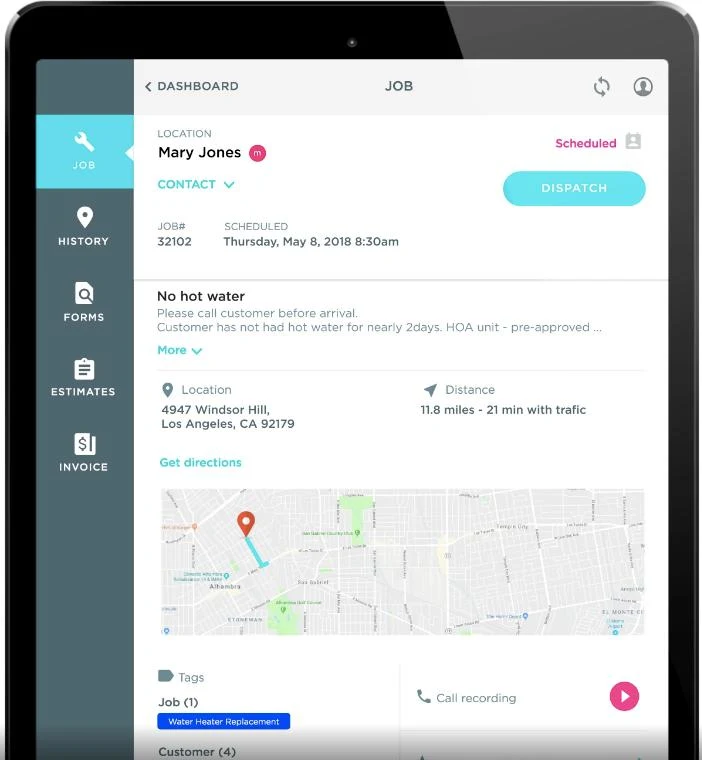
The app also keeps paperwork to a minimum. Digital forms, estimates, and job checklists are all stored in one place. Ready to confirm a warranty detail, check previous invoices, or update job status? It all happens on the tablet, in real time.
Estimate and invoicing software
Invoicing isn’t the most glamorous part of plumbing, but it keeps the lights on.
With the ServiceTitan Field Service App, lead plumbers can build precise, tiered estimates even when in the field, using photos, product descriptions, and even manufacturer videos. Instead of the usual awkward sales pitches, customers get presentations of different options and the ability to make confident decisions.


Once the work is approved, plumbing invoicing is just as easy. Plumbers can generate and send invoices on the spot and collect payments by card, check, or even cash. No trips to the office and no delays. It’s fast, professional, and designed to help you close out jobs in the field.
Job and task management systems
When you have multiple active jobs at once, keeping everything straight using phone calls and whiteboards is a recipe for disaster.
ServiceTitan’s built-in job management tools for the plumbing industry make it easy to organize every detail in one place.
Lead plumbers can view current job statuses, check task assignments, and pull up customer notes without having to chase paperwork back at the office.


Real-time updates and in-app communication let field teams and office staff stay on the same page. Whenever you need to flag a change order, upload a progress photo, or note a part shortage, everything is automatically tracked and logged.
Digital pricebook solutions
To build trust with customers, lead plumbers need access to accurate, consistent pricing in the field. This gives them the confidence to close jobs without second-guessing prices or having to make awkward back-and-forth phone calls to the CSR team.
With ServiceTitan Pricebook Pro, lead plumbers get instant access to professionally built service entries, complete with images, product descriptions, and even explainer PDFs. No guesswork, no scribbled quotes. Just transparent, data-backed pricing that supports upselling without the awkward sales pitch.


Smart Start uses Titan Intelligence to preload the most common services for your region so you don’t need to start from scratch. Pricebook Pro also auto-updates pricing, materials, and labor rates. This saves hours of admin time and eliminates pricing errors.
Inventory tracking software
Running out of parts mid-job doesn’t just slow things down; it’s a bad look for lead plumbers and their team. That’s why real-time inventory visibility is a must.
With ServiceTitan’s Inventory App, lead plumbers can check stock directly from the field. This way, they know exactly what’s in the truck before heading to the next job. The app tracks item usage, barcode scans, and warehouse locations, helping teams avoid delays and prepare more efficiently.


Templates and custom stock lists help maintain consistent truck inventory, and low-stock alerts automatically trigger replenishment before items run out.
Everything is logged in one centralized system, giving lead plumbers a clearer view of what’s been used, what’s available right now, and what still needs to be ordered.
Customer relationship management (CRM) platforms
Plumbing might be hands-on work, but excellent customer service starts with good information. A plumbing CRM tool makes that possible.
The best plumbing CRM software lets lead plumbers and their teams access customer profiles, job histories, past invoices, estimates, and even call recordings from one place.


With ServiceTitan, plumbers know the property, the person, and the problem before even arriving on site. That kind of context means better service, faster resolutions, and fewer awkward moments like mistaking one customer's leaking boiler for a clogged sewer line.
Reporting and productivity analytics tools
You can’t make improvements on what you can’t see. For lead plumbers, having access to real-time performance data helps keep jobs on track and teams running at full strength.
With ServiceTitan’s field reporting software, lead plumbers and managers can monitor technical output, track revenue trends, and spot opportunities for improvement on the fly. The dynamic dashboard gives a clear snapshot of what’s happening across the business. From job volume to conversion rates, the data is sorted by day, week, or team.

Need to catch a tech who has fallen behind? The technician scorecard shows revenue, memberships sold, and other key metrics per person. This makes it easy to support training and boost productivity.
Time tracking and payroll management systems
Between drive time and job time, tracking hours accurately is important—not only for payroll but also for how profitable each job really is.
With ServiceTitan’s payroll and timesheet tools, lead plumbers and technicians can rely on real-time timesheet tracking. The system automatically records wrench time, travel time, and vendor runs. This way, there’s no need to log hours manually.
On the office side, clock-ins sync with the dispatch board, making it easy to see who’s on the clock and who’s available for the next job.


Each technician can review and approve their timesheet before payroll is processed, helping to avoid mistakes and confusion.
If your plumbing business offers bonuses or performance pay, ServiceTitan can automatically apply those calculations. Accurate tracking also helps you evaluate your labor rate calculations and make adjustments based on real job costing.
With the tools in place, your new hire has everything they need to hit the ground running.
Over to You!
A job description that’s well-written and sets the tone for the kind of lead plumber you want to hire gives top candidates a reason to apply.
The right hire deserves the right tools to get the job done. That includes plumbing software along with the wrenches.
If you’re after more templates for all things plumbing, ServiceTitan has more free and polished templates to help you build a stronger team from the start.
Ready to support your lead plumbers with the tools to make their job easier? ServiceTitan has you covered.
Built for the trades, ServiceTitan helps plumbing businesses manage everything from dispatch and scheduling to inventory and real-time tech reporting. With mobile tools for the field and powerful features in the office, it’s how growing businesses stay efficient, profitable, and connected.


