

Templates Guides
Lead Electrician Job Description + Free Template
 Electrical
January 26th, 2026
ServiceTitan


Filling a lead electrician position is a critical business decision—the right hire strengthens team performance, elevates customer satisfaction, and supports sustainable growth.
So, how do you improve your chances of hiring the right person for the job?
It all starts with crafting the perfect job posting.
In this article, you’ll find a complete, customizable lead electrician job description to help you attract and hire top-tier candidates with the right mix of technical expertise, leadership, and project management skills.
Lead Electrician Job Description Template
Use this template to guide your next job posting and attract qualified, experienced candidates to lead electrical teams:
Job Summary: We are looking for a skilled and experienced Lead Electrician to oversee electrical projects from start to finish. They will manage field teams and ensure all work is completed safely, efficiently, and in compliance with relevant codes and regulations. The ideal candidate is a hands-on leader with strong technical knowledge, excellent communication skills, and a track record of successfully managing crews and delivering high-quality electrical work.
Key Responsibilities:
Supervise and coordinate the work of electricians and apprentices on job sites.
Interpret blueprints, technical drawings, and job specifications.
Install, maintain, and troubleshoot electrical systems in commercial, industrial, and residential settings.
Ensure all electrical work complies with local, state, and national codes and safety regulations.
Communicate with project managers, clients, and other trades to ensure everything is progressing according to plan.
Manage inventory, tools, and materials to prevent downtime or delays.
Maintain accurate records of work performed, materials used, and job progress.
Required Qualifications
High school diploma or equivalent.
Valid journeyman or master electrician license.
5+ years of hands-on electrical experience in leadership roles.
Deep understanding of NEC (National Electrical Code) and local regulations.
Preferred Certifications
OSHA 30-Hour certification
NFPA 70E (Electrical Safety in the Workplace) certification
Leadership or project management training/certification
Skills and Competencies
Strong leadership and team management abilities
Excellent problem-solving and diagnostic skills
Ability to interpret blueprints, wiring diagrams, and schematics
Proficiency in using power tools and diagnostic equipment
Clear verbal and written communication skills
Strong organizational and time management skills
Next, we dive into the essential responsibilities and qualities of a lead electrician.
The #1 newsletter for the trades.
What Does a Lead Electrician Do?
A lead electrician ensures that electrical projects are completed safely, efficiently, on time, and in compliance with all relevant codes.
Not only are they experts in their field, but they also act as a team supervisor who bridges the gap between the field team and management. Without a strong team lead, even the most experienced crews can struggle with coordination and costly mistakes.
The lead electrician oversees the daily operations undertaken by the electrical teams. They ensure that project deadlines are met, resources are well managed, and quality is never compromised.
In addition, they delegate tasks, interpret technical drawings for less experienced techs, troubleshoot complex issues, and ensure all tasks comply with safety and electrical standards.
Whether it’s a residential build, commercial installation, or industrial retrofit, the lead electrician is responsible for guiding crews, maintaining productivity, and ensuring customer satisfaction—all while keeping projects on track and within budget.
What Are the Primary Responsibilities of a Lead Electrician?
Lead electricians are more than just skilled electrical technicians. They take on the role of team leaders, project planners, and represent the first line of accountability on any electrical project.
Here are some of the duties you can expect in this role:
Supervising and delegating tasks to electrician teams: Lead electricians oversee the work of junior electricians and apprentices. They also assign tasks based on skill level, workload, and project needs to ensure smooth workflows.
Planning and coordinating electrical projects: Another key responsibility of a lead electrician is scheduling work phases. They coordinate daily workflows to make sure crews have enough personnel to meet deadlines without compromising safety or quality.
Interpreting blueprints and schematics: Lead electricians are also responsible for reading and interpreting technical documents and electrical diagrams. Then, they translate these plans into actionable steps for their teams.
Ensuring compliance with electrical codes: As team leaders, lead electricians ensure that all projects comply with local, state, and national electrical codes and regulations.
Conducting inspections and quality control: In addition to verifying industry compliance, lead electricians inspect completed work to ensure it meets project specifications in terms of quality, functionality, and safety.
Communicating with clients and contractors: Whether updating clients on progress or coordinating with other trades on a construction site, part of the lead electrician’s responsibility is to keep project stakeholders informed.
What Qualifications Are Required to Become a Lead Electrician?
Because lead electricians are expected to manage people, projects, and technical systems, the position demands a mix of formal training and hands-on experience.
Below are the minimum requirements candidates typically need to secure an employment contract:
High school diploma or GED: This is the foundation and a prerequisite for most electrician training programs.
Completed apprenticeship: A formal apprenticeship program ensures electricians have essential on-the-job training, and the duration typically spans four to five years. It’s a critical step for acquiring practical skills and trade certification.
Journeyman electrician license: Lead electrician candidates must hold a valid journeyman license, which verifies they have all the necessary experience to work unsupervised.
Five to seven years of field experience: Top lead electrician candidates have substantial field experience, including time spent managing tasks or mentoring others on job sites.
Strong knowledge of electrical codes: Lead electricians must be able to confidently interpret and apply complex code requirements to various residential, commercial, and industrial projects.
What Certifications Are Commonly Required for a Lead Electrician?
Certifications and licenses don’t just validate a lead electrician’s technical skills. They also boost project credibility and reduce job-site risks. For employers, listing the right credentials in your job description helps you attract qualified candidates and sets clear expectations for salaries. Here are the certifications to prioritize when hiring a lead electrician:
Journeyman or Master Electrician License: This is a baseline requirement. A journeyman license certifies that electricians can work independently, while a master electrician license demonstrates advanced expertise and qualifies the holder to pull permits and supervise large-scale projects.
OSHA 30 certification: An OSHA certification guarantees that the holder has completed training in job-site safety practices and hazard prevention. The OSHA 30 is tailored for supervisors and project heads, making it ideal for lead electricians.
CPR and first aid training (often preferred): Although this certification is not mandatory, it demonstrates a lead electrician’s ability to respond promptly in the event of an on-site emergency.
Many U.S. states also require electricians to obtain additional licenses or certifications based on local codes or specialty work (for instance, high voltage or fire alarm systems). Be sure to check your state’s licensing board for any other specifically required certifications.
What Skills Are Essential for a Lead Electrician?
Being a successful lead electrician requires a blend of technical and soft skills. While a solid grasp of electrical systems and codes is essential, soft skills such as leadership, communication, and problem-solving are equally important.
Technical skills
Here are some essential electrical skills to look for:
Advanced troubleshooting: Ability to diagnose and resolve complex electrical issues quickly, reducing downtime and avoiding costly errors.
Knowledge of electrical systems and safety codes: Proficiency in interpreting and applying NEC standards, local regulations, and best practices for safe and compliant installations.
Project planning and time management: Must be able to estimate timelines, allocate resources, and coordinate schedules to keep projects on track and within budget.
Soft skills
In addition to technical ability, lead electricians need strong interpersonal and organizational skills to manage teams on the job site.
Here are some essential soft skills to look out for:
Leadership and team management: Ability to delegate tasks, mentor junior electricians, and keep crews aligned on project goals.
Strong communication skills: Should be able to clearly convey instructions and provide updates to clients, contractors, and team members.
Attention to detail: Ability to review plans, identify potential issues early, and ensure that all work meets quality and safety standards.
Keep reading as we explore some interview questions that can help you evaluate potential lead electrician candidates beyond the information in their resume.
What Interview Questions Are Common for a Lead Electrician Role?
When hiring a lead electrician, you need to assess how candidates think on their feet, handle setbacks, and react to real-world situations.
The following interview questions go beyond CVs (curriculum vitae) to help you evaluate how an applicant would actually perform on the job.
Can you describe a time you led a team through a challenging project?
Why ask it: This question assesses the candidate’s ability to lead under pressure and deliver results.
Good answer: A strong response includes a specific example—such as a complex commercial installation or tight-deadline repair—highlighting how the candidate communicated, delegated tasks, and resolved setbacks to complete the project.
How do you ensure your projects meet local electrical codes and safety standards?
Why ask it: This tests a candidate’s technical knowledge and dedication to regulatory compliance, both of which are non-negotiable in electrical work.
Good answer: Look for candidates who reference the National Electrical Code (NEC) or relevant local standards. An ideal answer includes handbook information, such as regular on-site inspections, thorough documentation, and team briefings on safety practices.
What steps do you take when diagnosing a system failure?
Why ask it: This question evaluates a lead electrician’s approach to troubleshooting, including their ability to think analytically and solve problems.
Good answer: A great answer outlines a methodical process, starting with a visual inspection and basic voltage checks, moving to circuit tracing, equipment testing, and finally, reviewing past maintenance logs to identify patterns or recurring faults.
How do you handle conflicts or mistakes made by team members on the job?
Why ask it: This reveals how the candidate manages interpersonal dynamics and maintains high team performance without sacrificing morale.
Good answer: An excellent response includes identifying the mistake quickly, discussing it privately with the team member, and coaching them through the correct approach.
How do you stay current with electrical technology and industry changes?
Why ask it: This indicates whether the candidate takes initiative to keep their skills sharp and adapt to evolving tools, standards, and techniques.
Good answer: Strong candidates will mention attending trade seminars, completing continuing education or certification programs, reading industry publications, or participating in local electrician associations or training groups.
What Software Tools Do Lead Electricians Commonly Use?
From managing team schedules and documenting inspections to reviewing blueprints and tracking inventory, the right digital tools can boost productivity and accuracy on the job.
Here are common software tools that top electricians use to improve their workflows:
Dispatching and scheduling tools
Efficient scheduling and dispatching are key aspects of team management that help field teams minimize idle time. Lead electricians are often responsible for assigning team members to jobs and ensuring that technicians arrive on time.
With ServiceTitan's dispatching and scheduling feature, lead electricians can coordinate their teams with live map views, smart scheduling suggestions, and drag-and-drop assignments.
The platform also considers technician skill sets and availability, making it easy to match the right person to the right job.


Additionally, ServiceTitan provides real-time route optimization features to improve response times, minimize travel time, and enable electricians to complete more jobs per day.
Mobile field service apps
Having mobile access to information is crucial in today’s fast-paced field service environment.
For instance, lead electricians may need to update work orders, review job history, and communicate with office staff and clients without needing to return to the office.
And what better way to achieve this than with a reliable mobile app?
With ServiceTitan’s mobile field service app, lead electricians and their techs can enjoy real-time access to customer data, job updates, and task lists from the field.

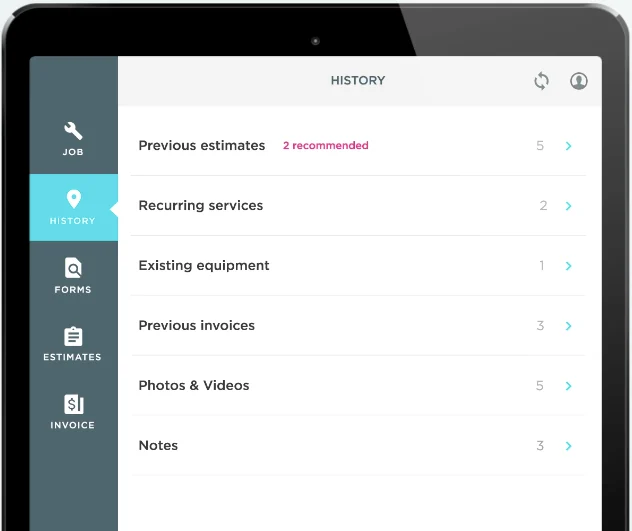
Technicians can upload photos, capture signatures, and complete checklists digitally for a seamless customer experience.
Estimate and invoicing software
Since lead electricians often present service options, explain costs, and finalize payments on-site, having a means to speed up this process can help improve customer trust and close deals more quickly.
ServiceTitan's estimating and invoicing features enable lead electricians to generate detailed invoices using pre-built templates and digital price books.

Customers can review options, approve them on a mobile device, and pay instantly. This reduces paperwork, accelerates cash flow, and keeps projects moving smoothly.
Job and task management systems
From task assignments to customer communication, a unified job management system supports accountability and prevents critical details from falling through the cracks.
ServiceTitan can help you centralize job data, notes, photos, and technician updates in a single dashboard. This unified view eliminates the need to juggle spreadsheets, paperwork, or disconnected tools.

Whether it’s a quick note about a job, a photo of a completed panel installation, or real-time technician status updates, everything is stored and synced in one place.
Digital pricebook solutions
Offering your customers a standardized pricing system maintains trust and consistency in service delivery.
With ServiceTitan’s PriceBook Pro, lead electricians can access an up-to-date library of services and parts, complete with visual aids and detailed descriptions.

They can present pricing with confidence, explain value to customers, and reduce pricing disputes. In addition, a lead electrician can also take advantage of upsell opportunities with pre-approved options.
Inventory tracking software
With a real-time inventory tracking solution, lead electricians can ensure that materials are available when and where they're needed. This helps to reduce project disruptions and improve job readiness.
ServiceTitan’s inventory management solution helps you track parts and materials usage in real-time, ensuring that necessary supplies are available for each job.


You can also connect field activities with inventory counts. This reduces repeat visits and increases operational efficiency.
Over to You!
Today’s lead electricians coordinate teams, manage projects, interact with clients, and ensure compliance and safety across the board.
The lead electrician serves as both a technical expert and a frontline manager, which is why making the right hire is critical to business success.
With the job description and detailed insights into key responsibilities and lead electrician qualifications in this blog, you should have everything you need to attract and evaluate top-tier lead electricians.
For contractors looking to equip their lead electricians with the necessary tools to lead confidently in the field, platforms like ServiceTitan provide an all-in-one solution.
ServiceTitan is a comprehensive software platform built specifically to help service companies improve their operational workflow, boost revenue, and boost productivity. On average, companies using ServiceTitan see a 25 percent revenue increase in their first year—thanks to smarter scheduling, real-time field updates, and powerful reporting tools that help you stay ahead of the job, every step of the way.


