

Templates Guides
Construction Contracts: Contractor Guide + Free PDF Template
 Construction
December 5th, 2025
ServiceTitan


Construction contracts lay the foundation for every successful project, giving structure to even the most complex jobs.
Contractors use these agreements to clarify expectations, optimize workflow, and protect their business from costly setbacks.
In this all-in-one guide, we explore the most common contract types, such as lump sum, design-build, and unit price, and learn what each offers. We also break down essential components, including scope of work, payment terms, dispute resolution, and more.
You’ll find practical tips on using a template, bringing in a legal expert, or streamlining the process with construction management software like ServiceTitan.
In addition, we’ll walk you through the benefits of using contracts, how to avoid common disputes, and how to end an agreement the right way.
Let’s get started!
What Is a Construction Contract?
A construction contract is a formal agreement that defines the terms and conditions for executing a building or infrastructure project.
Contract documents establish and clarify each party’s duties, project milestones, payment terms, and delivery timelines. Parties typically include property developers, contractors, subcontractors, consultants, and suppliers.
The primary function of a construction agreement is to create a reliable structure for managing the project, reducing the risk of disputes, and ensuring that work proceeds according to plans and standards. It serves as a key tool for project coordination and accountability.
Now, let’s explore the different types of construction contracts.
What Are the Different Types of Construction Contracts?
Listed below are the most common types of construction contracts, so you can choose the right one for your project’s scale, complexity, and financial structure.
Lump sum contracts involve a fixed price for all construction work.
Cost-plus contracts reimburse the contractor for all actual project expenses and provide an extra amount as profit, either a fixed fee or a percentage of costs.
Time and materials contracts include charges for actual time spent and materials used in the project.
Unit price contracts divide work into units, with pricing set per unit.
Guaranteed Maximum Price (GMP) contracts cover costs up to a set limit, beyond which the contractor bears the overrun.
Incentive contracts offer bonuses if specific performance goals are met.
Design-build contracts bring design and construction services under one entity, streamlining communication and delivery.
Integrated Project Delivery (IPD) contracts bring all major stakeholders under a single agreement that promotes collaboration by sharing risks and rewards between all parties.
Let’s break them down!
Lump sum contract
A lump sum contract, also known as a fixed-price contract, sets a total cost for the entire construction project. The contractor agrees to complete the work for said price, regardless of expenses incurred.
You can use this contract type if the project design is finalized and the scope of work is clearly defined. However, this type of agreement may pose risks in case of unexpected expenses.
Cost plus contract
In a cost-plus contract, the owner agrees to cover the entire cost of the work and an additional fee for the contractor’s profit.
This agreement offers you flexibility in design and execution, which is helpful in projects that evolve.
However, since there is no fixed price, owners must closely monitor every project phase and ensure all cost documentation is accurate and transparent throughout the process.
Time and materials contract
A time and materials contract charges based on the hours worked and the materials used.
This arrangement is ideal for smaller projects or a poorly defined job scope.
Although the contract offers flexibility, owners may face higher costs if the project drags on. This is why it’s important to provide clear tracking of labor and material costs.
Unit price contract
In a unit price contract, the work is divided into measurable units, such as square footage or linear feet, with set prices for each unit. Final costs depend on the total number of units used.
This contract type suits projects where you can’t estimate the exact unit quantity upfront, like infrastructure or utility work. It provides transparency in pricing, but you must keep detailed measurements and documentation.
Guaranteed Maximum Price (GMP) contract
A guaranteed maximum price contract limits the total amount the owner will pay. The contractor must cover any costs that exceed this limit.
This contract still allows for some flexibility, especially if the final design isn’t complete at the outset. However, staying within budget requires extensive planning and detailed cost control.
Incentive contract
An incentive contract offers financial rewards for meeting or exceeding specific project goals, such as finishing early or under budget.
This agreement encourages your team to stay productive and efficient and align their interests with the owner's. To ensure success, you should set clear, measurable goals in advance.
Design-build contracts
A design-build contract assigns both design and construction duties to a single entity. This arrangement simplifies communication, shortens timelines, and reduces conflict between the design and build phases.
This contract suits projects where the owner wants a streamlined approach with a single point of responsibility. In this case, close coordination between teams is of the utmost importance.
Integrated Project Delivery (IPD) Contract
The integrated project delivery contract entails close collaboration between the project owner, designer, contractor, and key stakeholders. All these parties share responsibilities, risks, and profits.
This model improves coordination, reduces waste, and encourages innovation by aligning interests from the beginning. It suits complex projects that benefit from the early involvement of all team members.
Next, we’ll look into the requirements of construction agreements.
What Are the Requirements of a Construction Contract?
A well-prepared construction contract must cover specific legal and project-related details to guide the work and protect all parties involved.


Let’s take a closer look at each of these components.
Scope of work: Defines the project’s overall purpose, outlining the tasks the contractor must complete, including the materials, methods, and expected results.
Project timeline: Sets the start date, key milestones, and completion date to keep work on track and ensure timely delivery.
Payment terms: Describes how and when payments will occur, including schedules, methods of payment, and consequences for delays or disputes.
Change orders: Explains how the parties can modify the project's original scope, cost, or timeline once work has begun. Typically, any changes to the contract clauses require all parties to sign a written agreement.
Termination clause: Defines the general conditions under which either party can end the contract and the process that follows termination.
Dispute resolution: Outlines how disagreements will be resolved, typically through arbitration, mediation, or court proceedings.
Warranties and liability: Clarifies who is responsible for damages, defective work, injuries, or accidents during the project and details the required liability insurance coverage.
Force majeure: Addresses delays or failures caused by unexpected events beyond either party’s control, like natural disasters or pandemics.
Keep reading to learn about the benefits of signing contracts for all your construction projects.
What Are the Benefits of Using a Construction Contract?
A construction contract provides a structured framework for managing complex projects. Here are other benefits it offers.

Cost control
A well-structured contract outlines the total project cost, payment schedule, and provisions for additional charges.
By documenting these financial terms, you can prevent cost overruns and keep budgets in check. A contract also ensures that scope changes follow a clear approval and pricing process, giving you better control over financial planning, including terms for retainage and progress payments.
Timeline management
The contract assigns deadlines to specific tasks and outlines non-compliance penalties, encouraging accountability and preventing delays.
For instance, the agreement can include liquidated damages covering losses if a party misses key dates.
Legal protection
A construction contract acts as a legal safeguard for all parties. It outlines responsibilities, enforces compliance with applicable laws, and protects against breach of contract.
For example, you could create a secure legal framework for employees and subcontractors in a contract, including provisions on workers’ compensation insurance, safety standards, and potential waivers.
Dispute resolution
Construction contracts include precise methods for resolving disagreements, such as arbitration, which helps avoid lengthy courtroom battles.
If all parties agree upfront on how to handle disputes, the contract reduces tension and keeps the project moving even when issues arise.
Risk management
The contract covers various risks, such as unforeseen delays, site conditions, and cost fluctuations, assigns liability, and outlines each party's responsibilities.
It also includes insurance, safety, and contract performance clauses to help mitigate losses before they escalate.
Explore our comprehensive guide to learn the ins and outs of construction risk management.
Given all these benefits, it’s time to talk about drafting contracts.
How Can You Make a Construction Contract?
You can create a construction contract using different methods based on your project's complexity, budget, and legal requirements.
Each approach offers distinct advantages and considerations.
Use a template
Construction contract templates provide a structured starting point, preventing critical clause omissions.
Pros:
Expedites the drafting process.
Guarantees the inclusion of all standard contractual components.
It’s usually low-cost or free.
Cons:
May require customization to suit specific project needs.
Might not address unique legal considerations.
Hire a legal professional
When dealing with complex construction projects, it’s advisable to hire a legal expert to draft your contract documents or consult a legal advisor.
Pros:
Tailors the contract to the project’s unique requirements.
Guarantees compliance with local and state laws and provides risk mitigation.
Cons:
It’s much more expensive than using templates.
The turnaround time is often longer due to the detailed customization.
Use software
Construction management software can simplify contract creation, integrating various project management tools for increased efficiency.
Pros:
Centralizes project documentation and workflows.
Facilitates real-time collaboration and updates.
Cons:
Requires investment in software.
Involves time and training for new users to get fully up to speed.
The ServiceTitan Construction Management Software provides an all-in-one solution that streamlines all aspects of business, including project planning, workforce organization, and financial management.
In addition, ServiceTitan offers robust features that enhance contract management.
Estimate creation
ServiceTitan simplifies construction cost estimating, ensuring your contracts reflect accurate pricing and scope. Customizable templates, automated markups, and flexible line-item organization guarantee that the financials attached to your agreements are meticulous.


Estimate import experience
If you’re working with external estimates, ServiceTitan allows you to import them directly into the platform, even if the items don't currently exist in your pricebook. You can refine, adjust, and integrate pricing without starting from scratch, ensuring all numbers are accurate before adding them to the contract.
Construction cost library (Pricebook)
The ServiceTitan Pricebook equips you with an up-to-date cost library, including material costs, labor rates, and subcontractor fees. You can even upload or create pricebooks with your preferred vendors, so your contracts reflect real-world costs and protect your margins.
Material takeoffs
Easily pull quantities and specifications from blueprints to include precise material lists and accurate pricing in your contracts. This feature minimizes change orders and provides data-backed estimates for your agreements.
Document management
With ServiceTitan, construction document management has never been easier. You can centralize all contracts and subcontracts using folders, version control, and secure permissions. Plus, your team can mark up PDFs, track revisions, and share files with stakeholders. Advanced AI-powered tagging makes locating key contract documents effortless, so you can access or update them quickly.


What Should Commercial Construction Contracts Include?
Commercial construction contracts deal with larger budgets, more stakeholders, and higher regulatory demands. They include specific clauses that address these complexities.
Here are some of the key components you should include:
Scope of work providing a detailed description of deliverables and expectations.
Timeline and milestones to establish a clear construction schedule with start dates, deadlines for completion of the work, and penalties for delays.
Payment terms, outlining progress payments, retainage, and conditions for release.
Risk and insurance detailing the requirements for workers’ compensation insurance, general liability coverage, and performance bonds.
Compliance referencing OSHA regulations, zoning laws, and other applicable commercial codes.
Subcontractor coordination, including terms and conditions for managing multiple subcontractors and vendors.
Dispute resolution shows the procedures for handling conflicts through arbitration or mediation.
Change orders and delays display the processes for changing the scope, including cost adjustments and potential liquidated damages.
These elements provide accountability, reduce risks, and help you manage large-scale commercial builds efficiently.
Now, let’s shift our focus to residential construction contracts.
What Should Residential Construction Contracts Include?
Residential construction contracts prioritize homeowner clarity, legal protection, and manageable terms.
A well-drafted residential agreement should include:
Project scope should consist of a simple, clear outline of the work your team will perform.
Schedule and completion date providing a timeline that includes key milestones and a target finish date.
Payment plan to define progress payments tied to work completed, payment methods, and the final payment date.
Permits and regulations clarifying who secures building permits and how you will comply with local residential codes.
Insurance coverage includes proof of workers’ compensation and general liability insurance.
Warranties and guarantees detailing workmanship warranties and material guarantees.
Change orders establish a structured process for handling changes in design, materials, or costs.
Consumer rights refer to contract cancellation, dispute resolution, and legal recourse.
This type of contract helps the contractor and the homeowner understand their obligations and move forward with the project.
Explore ServiceTitan’s Complete Guide to Residential vs. Commercial Construction to better understand what sets these two types of construction projects apart.
What Are Some Common Disputes Regarding Construction Contracts?
Disputes in construction contracts often arise from miscommunication, unclear documentation, or financial discrepancies.
If you identify and address these issues before they escalate, you can protect your business, maintain project timelines, and ensure customer satisfaction.
Payment disagreements
Payment disputes typically occur when the invoices do not reflect the actual portion of the work completed due to inaccurate billing, unclear payment terms, or missing documentation.
The ServiceTitan Job Costing Software addresses this issue by providing real-time visibility into every cost component, including materials, equipment, labor, purchase orders, and commissions. The system also generates a Project Summary that aligns with accounts receivable, ensuring all charges are backed by data.


You can use the Work in Progress (WIP) Reporting feature of the ServiceTitan Project Tracking Software to track billable amounts accurately, reducing the risk of over- or underbilling.


Undocumented scope changes
When scope changes occur but go unrecorded or unpriced, expectations misalign quickly, causing conflicts between general contractors and clients.
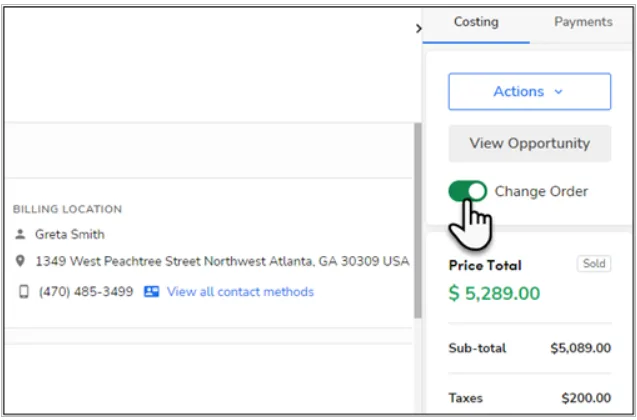
ServiceTitan mitigates this risk through the integrated Change Order feature. This solution allows you to create or import change orders directly into the platform and link them to budgets, schedule of values (SOV), and billing structures. Once approved, all related project data updates instantly, providing real-time visibility into scope and cost changes.

Budget overruns
Costs can spiral out of control when budget tracking is manual or delayed, and contractors often find out too late that a project is financially off track.
The ServiceTitan Job Costing Software helps avoid overruns with project budget vs. actual tables that update automatically as your teams log labor hours, use inventory items, or submit purchase orders. These live comparisons highlight discrepancies immediately, allowing you to take corrective action before costs exceed estimates. Combined with job cost flyouts and digital documentation, this feature provides the financial control necessary to protect profit margins.


Project delays
Missed tasks, labor shortages, or a lack of real-time project overview often cause costly project delays.
The ServiceTitan Project Tracking Software solves this issue by offering a centralized dashboard for every project. This tool enables your team to assign, monitor, and adjust tasks using the built-in Task Management feature.


You can also use the ServiceTitan Project Backlog feature to get a clear overview of the projects you haven’t started yet. This capability provides key metrics, such as contract value, start dates, labor needs, and timelines, helping your team schedule work more efficiently and avoid unnecessary downtime.
Unfortunately, not all problems can be avoided or resolved, making contract termination the preferred option in some instances.
How Can You Terminate a Construction Contract?
Ending a construction contract requires a clear understanding of the agreement's terms and conditions and the applicable legal procedures.
In most cases, you can terminate a construction contract under the following circumstances:
Mutual agreement: Both you and the client choose to end the contract by signing a termination agreement, outlining final payments, responsibilities, and any unresolved obligations.
Breach of contract: This occurs when the other party fails to meet their obligations, such as non-payment or poor workmanship, giving you the right to terminate the contract based on the breached clause.
Termination for convenience: Allows you to terminate the contract for any reason as long as you provide written notice within an established timeline. However, keep in mind only some agreements include this clause.
Force Majeure enables you to end the contract in case of natural disasters or uncontrollable events that prevent the other party or you from meeting the obligations.
In a nutshell, proper documentation, written notice, and sound legal advice can ensure a smooth termination process.
With the proper knowledge and tools like ServiceTitan, you can create, manage, and optimize construction contracts that keep projects running smoothly and clients satisfied.
ServiceTitan is an all-in-one software platform that offers powerful tools to facilitate estimating, bidding, document management, and project tracking. This solution equips contractors with real-time job costing, automated workflows, and seamless contract handling, all designed to boost productivity and protect profit margins.
Disclaimer: This article is intended for informational and educational purposes only and does not constitute legal advice.


